
- Week One: A Single Insect
- Weeks Two to Four: The First Hatch
- Weeks Five to Eight: Bites Begin
- Months Two to Three: Visible Evidence
- Months Four to Six: Spread
- The Signs, Ranked by How Early They Appear
- When to Check Even Though Nothing Is Wrong
People often ask what they missed. Usually the answer is nothing, because for the first few weeks there is genuinely almost nothing to see.
Week One: A Single Insect
One pregnant female arrives in a suitcase, a bag or a piece of second-hand furniture. She finds a harbourage within a couple of metres of where someone sleeps and starts laying a few eggs a day.
Detectable? Essentially not. No spotting worth the name, no shed skins, and bites from a single insect are sporadic and easily attributed to something else.
Weeks Two to Four: The First Hatch
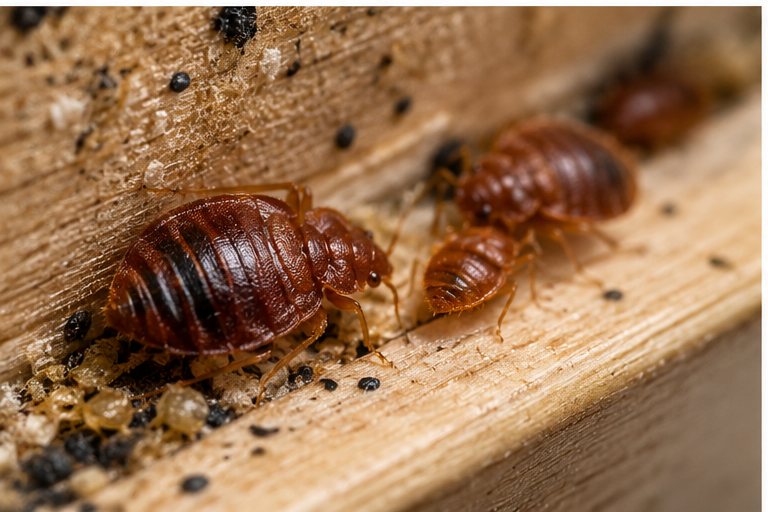
The first eggs hatch. Tiny translucent nymphs start feeding and moulting, and the first shed skins appear in the harbourage.
Detectable? Only by deliberate inspection. A few specks of spotting deep in a mattress seam, some cast skins. Nobody finds this by accident, and this is the point at which a treatment would be cheapest and easiest.
Weeks Five to Eight: Bites Begin
The first generation reaches adulthood and starts laying. Numbers begin to compound rather than add.
Detectable? Yes, and this is when most people notice — usually because of bites rather than evidence. It is also when people attribute the bites to something else for another fortnight, which is the fortnight that costs them.
Months Two to Three: Visible Evidence
- Clear spotting along the mattress seam and on the divan
- Shed skins in several sizes, showing multiple generations
- Live insects findable without much searching
- Bites on more than one person in the household
- Occasionally a faint sweetish smell in a heavily infested room
Almost every call we take is from this stage. It is treatable, straightforwardly, and it is more expensive than it needed to be.
Months Four to Six: Spread
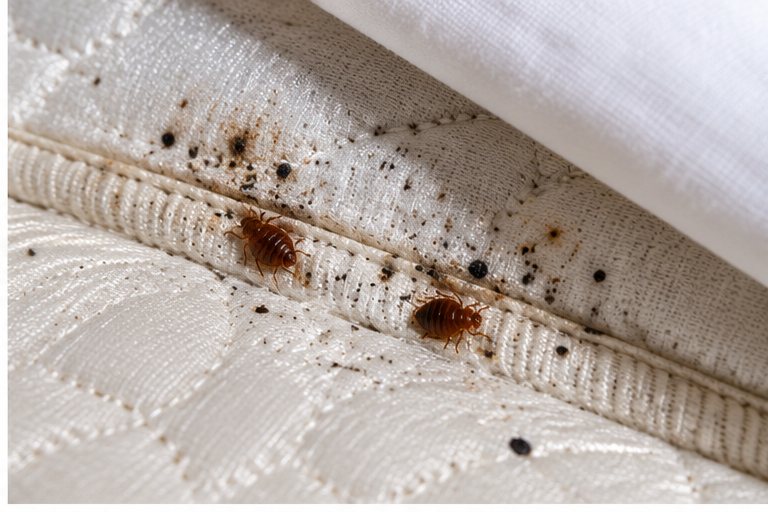
The harbourages near the bed are crowded, so the population expands outward — the next room, the sofa, and in a flat, through the wall to the neighbour.
Someone in the household has usually moved to the sofa by now, which takes the problem with them and turns a one-room job into a two-room one.
Treatment at this stage is a heat job or a long chemical course across several rooms, and it costs several times what it would have at week four.
The Signs, Ranked by How Early They Appear
- Spotting deep in the mattress seam — earliest reliable sign, needs a torch and intent
- Shed skins — slightly later, and proof of breeding rather than a visitor
- Bites — middle of the timeline, unreliable, and the one everyone starts with
- Live insects found easily — late
- Bites on multiple people — late
- Smell — late and heavy
When to Check Even Though Nothing Is Wrong
The introductions are predictable, so check the seam at the head end — ninety seconds — after any of these:
- A hotel, hostel or Airbnb stay, particularly abroad
- Second-hand furniture of any kind, above all a bed, a mattress or an upholstered chair
- A guest who stayed over and had been travelling
- Moving into a property where you do not know the history
- A neighbour mentioning it, in a flat or a terrace
Related Questions
How quickly do bedbugs multiply?
A female lays a few eggs a day for months, and a generation takes about five weeks in a heated home. That compounds, which is why the difference between acting in week four and week twelve is so large.
Can you have bedbugs without being bitten?
Yes, and it is common. Some people show no reaction at all, which is why households frequently discover it because one person is covered and another has noticed nothing.
Is there a smell?
In a heavy, established infestation sometimes — a faint sweet, musty smell. It is a late sign and its absence means nothing at all.
Bedbug Inspections London — Advice
Everything else written up for this service, and the service page itself if you would rather just get a price.
Tell Us About the Property
Tell us what you have seen and where, and we will tell you what it needs.