

They Arrive in Bags, Not Through Dirt
A bedbug has no interest in crumbs, rubbish or mess. It wants a person asleep nearby and a narrow gap to wait in. A clean, newly built flat suits it as well as anywhere else, so how tidy a home is tells you nothing about whether it can get them.
What moves them is luggage and anything soft that has sat near a bed somewhere else. A few insects, or a handful of eggs glued into a seam, are enough. The usual routes into a home are plain enough:
- Suitcases and holdalls back from a hotel, hostel or holiday let
- Friends and family staying over, and the bags they leave on the spare bed
- Students coming home from halls or a shared house with everything they own
- Second-hand mattresses, sofas, bed frames and upholstered chairs
- Moving house, where boxes and furniture have come from somewhere unknown
None of this means someone was careless. It means the bag sat in the wrong room for a night. What matters is spotting it early and not spreading it while you decide what to do.
A Borough With a Lot of Coming and Going
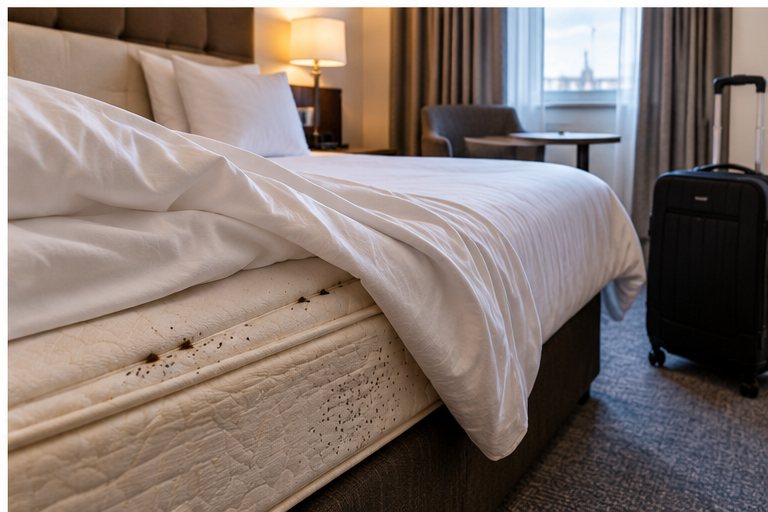
Greenwich takes in a great many visitors, a university population and a steady stream of people moving into new flats. That is a lot of luggage crossing a lot of thresholds, and it shapes the questions we get asked here.
If you let out a flat or a room to short-stay guests near the town centre, the problem is turning the space round between bookings; the Greenwich town page covers that. For a hotel or anything run as a business, the hotel treatment page is the one to read.
Students are the other big group. The moment to be careful is the end of term, when a whole room is packed into bags and carried home. Our guide to taking bedbugs home from university halls goes through packing, the journey and unpacking at the family home, and the one on books, bags and backpacks covers the things that travel with you every day.
Treatment in a Modern Flat
The newer riverside blocks around the Royal Arsenal in Woolwich, and the flats at Kidbrooke Village, are built tight: sealed windows, service risers, shared corridors and walls with a neighbour on every side. That changes a few things.
Heat often suits a compact flat well. Smaller rooms with fewer heavy pieces of furniture tend to come up to temperature evenly, and the thermal camera can confirm the cold spots have come up before we finish. The limit is the one we give everyone in a shared building: heat leaves nothing behind once the room cools, so a light residual may go along the skirtings and service openings as well.
Two practical points. Smoke and heat detectors in a managed block are often wired to a central system, so the building manager needs to know the date before a heat treatment. And if the neighbours are affected too, treating one flat on its own rarely holds, so tell the managing agent in writing. The Woolwich page covers checking a rental flat before you unpack, and the Kidbrooke page deals with home offices and the furniture you work in.
Treatment in a Suburban House
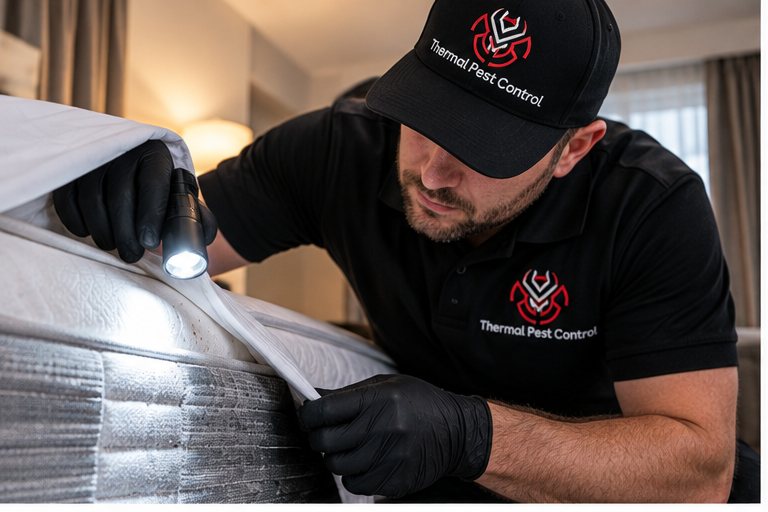
Eltham is largely interwar suburban houses, and a house of that kind usually means several bedrooms, stairs, and furniture that has been in place for years. In a house the question is usually not the walls but how far it has spread between rooms.
If it is one bedroom and caught early, chemical treatment often does the job well and costs less: residual insecticide into the mattress seams, the frame, the skirtings and the furniture joints, with a second visit, sometimes a third, about 10–14 days apart for the eggs that hatch after the first. If two or three rooms are involved, or someone has been moving between beds, heat in one visit is often the better answer even though it costs more.
Bigger older houses bring their own problems. High ceilings and solid walls take longer to heat, which the Blackheath page explains, and the Eltham page covers planning a treatment day around work and school.
Heat or Chemical, in Short
- Heat: the whole room raised to a temperature bedbugs cannot survive and held there, eggs included. Usually one visit, most of a day, room back once it has cooled. Heat-sensitive items and pets come out first.
- Chemical: residual insecticide worked into seams, frames and skirtings. One to two hours a visit, usually two visits, back in the room once it is dry. You strip and hot-wash the bedding and clear the floor.
- Not sure it is bedbugs? An inspection confirms it before you spend money on treatment.
The full detail is on the heat treatment and chemical treatment pages.
What It Costs
Bedbug treatments start at £220 and inspections start at £120. The final figure depends on how many rooms are involved and whether you choose heat or chemical; heat costs more because of the equipment and the time on site. You get the figure on the phone before anything is booked.
While You Wait for Us
- Keep sleeping where you sleep. Moving to the sofa or a spare room usually takes them with you.
- Leave the mattress and bed where they are. Carrying them out through the house spreads them, and a new one gets infested from the frame.
- Keep any bug you find. Sticky tape or a sealed bag is fine; it makes identification easy.
- Stop things travelling. Bags, coats and laptops stay off the bed and out of the affected room.
If you are thinking about whether the bed itself needs replacing, read bedbugs and bed frames first. For bedding, the guide to pillows, duvets and mattress toppers says what can be washed and what cannot, and if you are tempted to buy traps, what traps and monitors can and cannot tell you is worth reading before you spend anything.
Bedbug Control Across Greenwich
Pages for particular parts of the borough, each dealing with one common situation:
Bedbug Advice for Greenwich
Written up in full for people in the borough, and worth reading before the treatment day.
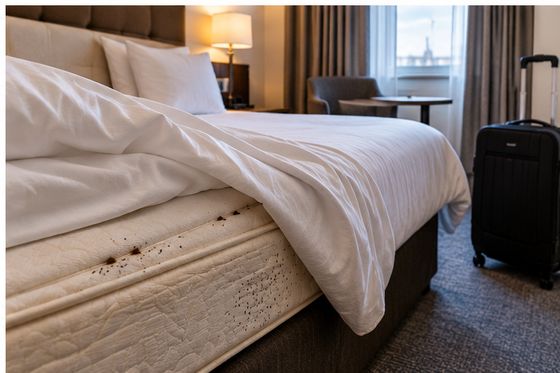
Taking Bedbugs Home From Halls
Packing up a room in halls, the journey home, and unpacking without spreading them.
Read more →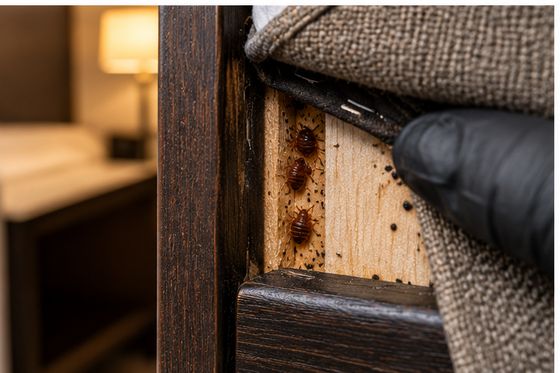
Metal, Wooden or Divan: Which Bed Frame?
Which frames give them most places to hide, how each is treated, and whether to replace.
Read more →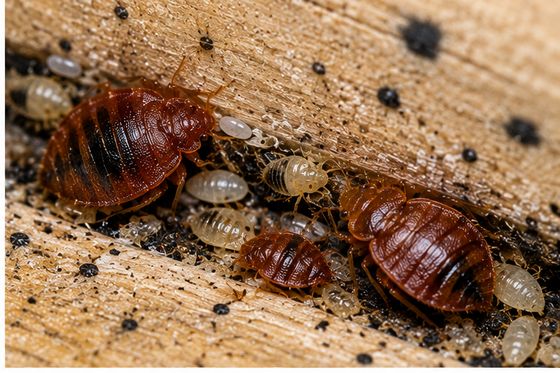
Books, Bags and Backpacks
The things that go in and out of the bedroom every day, and what to do with them.
Read more →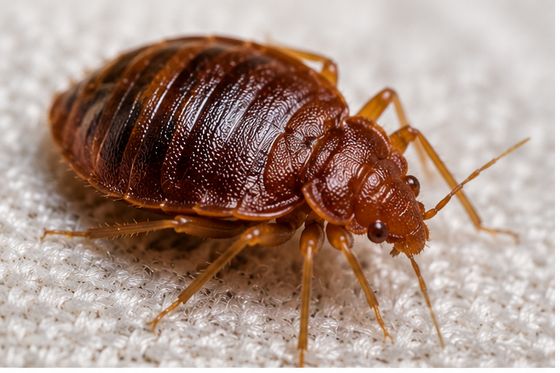
Pillows, Duvets and Mattress Toppers
What can be washed, what can be dried, and what needs treating or replacing.
Read more →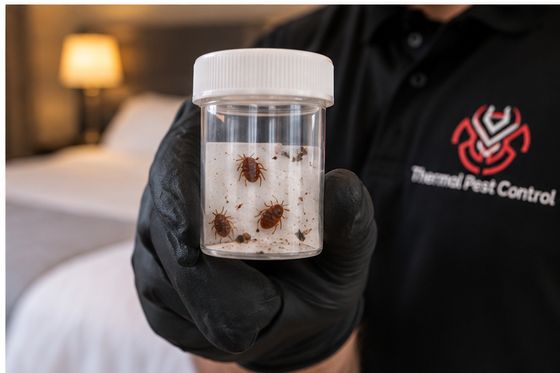
Do Bedbug Traps and Monitors Work?
Interceptor cups and monitors as a way of finding bedbugs, not a way of treating them.
Read more →Bedbug Control Greenwich — Questions
Do you cover the whole borough?
Yes, from the riverside at Woolwich and Greenwich to Eltham, Abbey Wood and the areas in between. Ring 0800 955 1018 or use the form and say where you are.
I have just come back from a trip and found a bug in my case. What now?
Keep the case closed and away from the bedroom, wash and hot-dry the clothes in it, and keep the bug if you can. If you then see signs around the bed, book an inspection through the inspections page.
Is a new-build flat less likely to get bedbugs?
No. Bedbugs need people and somewhere to hide, and a new flat has both. What a new block changes is the treatment: shared walls and central alarm systems need planning.
Should I go and stay with family until it is treated?
Usually not. Bedbugs travel in your bags and clothes, so staying elsewhere tends to give the family home the same problem. Stay put and keep things out of the bedroom.
Who pays if I rent?
It depends on the tenancy and on how the bedbugs got in. Report it to your landlord or agent in writing. We are pest controllers, not legal advisers, but we can tell you what we found.
Are the bites dangerous?
Reactions vary a great deal and some people do not react at all. For itching or a skin reaction, speak to a pharmacist or your GP, and ring 999 for any sign of a severe allergic reaction.
How long before I can use the room again?
After a chemical treatment, once the treated surfaces are dry. After heat, once the room has cooled down at the end of the day. We tell you on the day and you follow those instructions.
Bedbug Treatments in Greenwich
Every service has its own page for Greenwich: heat, chemical, hotels, commercial premises and inspections.
Covering Greenwich
Tell Us About the Property
Tell us where you are and which rooms are affected, and we will ring you back with a price.