

Why the Way In Matters
Bedbugs do not appear from damp, dust or an old house. Every one of them was carried in, usually in something soft or something with seams: a suitcase, a holdall, a coat, a second-hand chair, a box that sat somewhere else for a while. A treatment deals with the insects already in the room. It does nothing about the bag that brought them, if that bag is still going back and forth.
The borough is mostly settled, residential housing, much of it Victorian and Edwardian, where families stay put for years. Homes like that tend to have a steady flow through them rather than a one-off event: grown-up children visiting, friends staying for a match or a weekend, a spare room let to someone who works nearby in the week, holidays, and belongings parked elsewhere during building work. Any of those can bring bedbugs in twice.
The Routes We Ask About
When you ring, we will ask what has come into the house lately and who has slept where. These are the usual answers, and each has its own page:
- A guest or family member who stayed a few nights and left, with bites starting a week or two later in the room they used.
- A lodger who sleeps in the spare room on weekdays and somewhere else at weekends; the Mortlake page deals with that arrangement.
- A trip away, from a cruise or coach tour, covered on the Twickenham page, to a cottage or B&B, covered in our UK holiday guide.
- Belongings brought back from a storage unit, which is the subject of the Barnes page.
- A furnished short let while you relocate or wait to buy; see Richmond Town Centre and Teddington.
- A club, class or rehearsal that meets in your front room, which the Kew page takes on.
- Second-hand furniture, a rug or a bed brought home from a sale or a friend.
Often two or three of these apply at once, and that is fine. We are not looking for someone to blame; we are looking for the thing that needs handling differently next time.
Reading the Clues in Your Own House
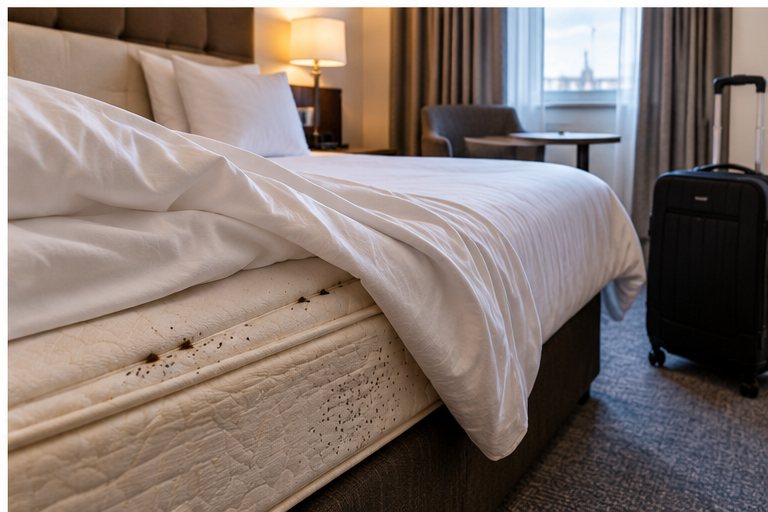
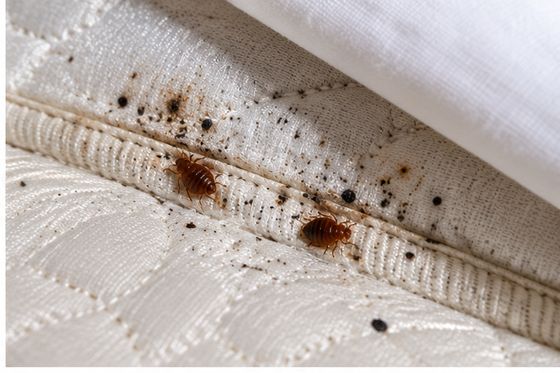
Where bedbugs turn up first says a lot about how they arrived. A cluster in the spare bed and nowhere else points at a visitor or a lodger. Signs round the chair where suitcases are opened point at a trip. A single sofa or armchair with spotting on its seams points at the furniture itself, or at a group that sits there.
- Write down which room, and which piece of furniture, showed the first sign.
- Think back over the previous month: stays, trips, deliveries, things fetched from a loft or a unit.
- Note who has bites and who does not, remembering that plenty of people never react; bedbug bites or mosquito bites explains why the bite alone settles little.
- Leave the evidence where it is. A photograph of spotting on a seam helps us more than a scrubbed mattress.
If you are not yet sure the insects are bedbugs at all, start there. An inspection in the borough checks the rooms and belongings linked to the likely route before any treatment is paid for; inspections start from £120.
Keeping the Route Shut While You Wait
The days between finding bedbugs and the first visit are when a problem most often grows. The instinct is to reorganise the house. Resist it. Keep everyone sleeping in their usual beds, because a person who moves rooms usually takes a few insects with them. Do not throw out the mattress or the bed unless we advise it; carrying it down the stairs sheds bedbugs on the way.
Then deal with the route. Ask the lodger to keep their bag off the bed and on a hard floor. Put off guests for the spare room until it has been treated. Leave anything from the storage unit boxed and in the hall rather than unpacked into a bedroom. Hot-wash bedding and nightwear from affected rooms, and bag it before it crosses the landing.
Heat or Chemical for a House Like This
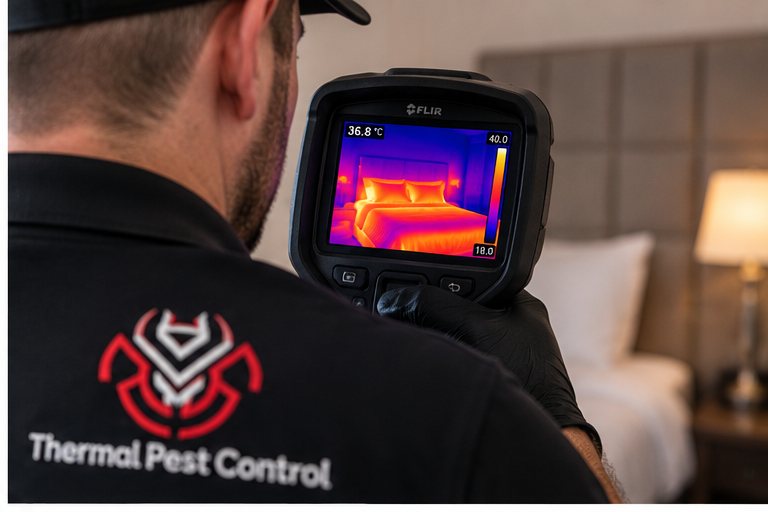
With heat, the room is brought up to a temperature bedbugs cannot survive and held there, with a thermal camera used to hunt for cold spots. It kills eggs as well, so it is normally one visit lasting most of a day. It suits a house where the visitors keep coming, because the room is finished in one go rather than in the middle of a course when the next guest arrives. It costs more than chemical, and heat-sensitive items come out first. See heat treatment in Richmond.
Chemical treatment puts a residual insecticide into seams, frames and skirtings. It does not reliably kill eggs, so there are usually two visits, sometimes three, about 10 to 14 days apart, each taking an hour or two, and you are back in the room once it is dry. It costs less and works well for one room with a clear cause. Plan the visits around guests and trips so nobody new sleeps there mid-course. See chemical treatment in the borough.
Anyone letting rooms to paying visitors, such as a B&B, should look at our hotel and guest house page instead, and clubs or venues with changing rooms at the commercial page.
After Treatment: Changing the Habits
Most returns after a treatment are a new arrival along the same road, not a failure of the first job. Why bedbugs reappear after treatment goes into the difference. A few small habits make that road much harder to use:
- Open suitcases on a hard floor or a luggage rack, never on a bed, both away and at home.
- Unpack straight into the washing machine after a trip, then put the empty case somewhere other than under the bed.
- Give guests a spare-room routine: bag on the chair, not the duvet.
- Check furniture and boxes before they come in from storage or a sale, not after.
- Keep robes and towels off the floor by the bed; our towels and bathrobes guide explains why the robe matters more than the towel.
Myths That Send People the Wrong Way
Two beliefs make the route harder to find. The first is that bedbugs come from a dirty home. They feed on blood and nothing else, so crumbs and dust make no difference, which what bedbugs feed on sets out. The second is that you would hear or feel them moving; they make no sound, and people often chase a creak or a rustle instead of looking at the mattress seams. Do bedbugs make noise? covers what is really worth checking.
Prices and Booking
Treatments start from £220, and inspections from £120. What you pay depends on the number of rooms and on whether you choose heat or chemical, and you hear the figure on the phone before anything is booked. Call 0800 955 1018; it is free. Tell us about the comings and goings as well as the bites, because that is what shapes the plan.
The remaining area pages cover helping an elderly neighbour in Ham who cannot get a room ready alone, and a newly decorated bedroom in East Sheen.
Bedbug Control Across Richmond
Each area page takes a single way bedbugs reach a home, or a single problem in dealing with them.
Bedbug Advice for Richmond
Written up in full for people in the borough, and worth reading before the treatment day.
Bedbugs on a UK Holiday
A quick check of the room on arrival, what to do if you find them, and unpacking safely back home.
Read more →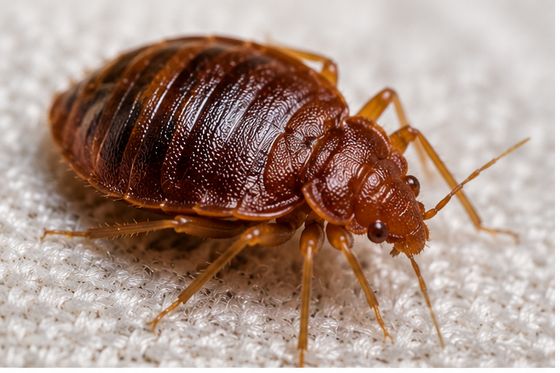
Do Bedbugs Make Noise?
They are silent. What people hear and feel at night instead, and where the useful clues actually are.
Read more →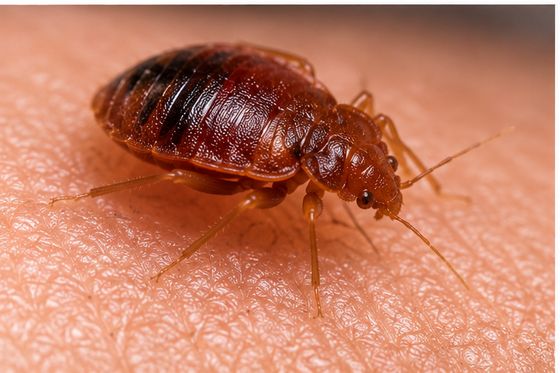
What Bedbugs Feed On
Blood and nothing else: how often they feed, why a spotless house is no defence, and what it means for treatment.
Read more →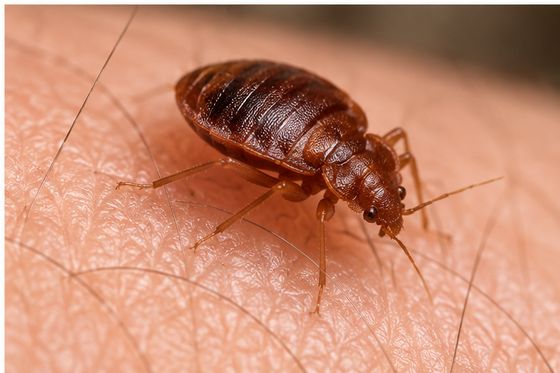
Bedbug or Mosquito Bites?
Timing, pattern, place and season, why the marks alone seldom decide it, and when to see a pharmacist or GP.
Read more →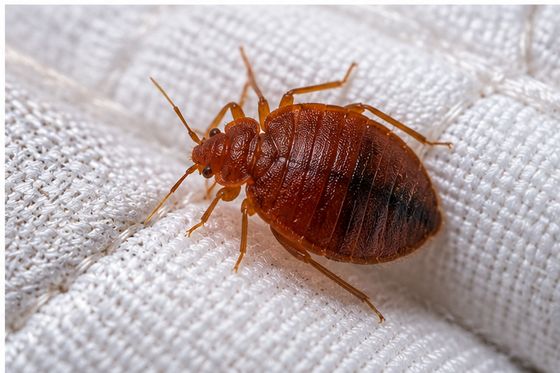
Towels and Bathrobes
Towels are a poor home, a robe on the bedroom door is not, and how to wash both properly.
Read more →Bedbug Control Richmond — Questions
How much is bedbug treatment?
Treatments start at £220 and inspections at £120. We confirm the price on the phone once we know how many rooms and whether it is heat or chemical.
We had guests to stay and now the spare bed has bedbugs. Should we tell them?
It is kind to, so they can check their own luggage and bed, but keep it factual. Bedbugs can be picked up anywhere, and nobody needs to have done anything wrong.
Our lodger goes home every weekend. Could the bedbugs keep coming back with them?
They could if the other home has them too. Treating your room alone will not close that route, so talk it through with us before booking.
Can we still have visitors after treatment?
Yes, once the room is back in use. With a chemical course, try to avoid new guests in that room until the last visit is done.
Is it worth moving everyone into one room until the visit?
No. Sleeping elsewhere tends to spread bedbugs to the new room. Stay in your usual beds and keep the floors clear.
Do bedbug bites need a doctor?
Reactions vary and some people show nothing. For an itchy or sore reaction a pharmacist or GP can advise; ring 999 for any signs of a severe allergic reaction.
Should we throw away the bed the guest used?
Not unless we tell you to. Beds and mattresses can normally be treated where they stand, and moving them through the house spreads the problem.
Bedbug Treatments in Richmond
Every service has its own page for Richmond: heat, chemical, hotels, commercial premises and inspections.
Covering Richmond
Tell Us About the Property
Tell us which room is affected and who or what has come and gone lately, and we will ring back with a price.