

Why Treatments Have to Be Repeated
There is a difference between a treatment that failed and one that is still running. Chemical treatment is planned as a course: the residue does not reliably kill eggs, so a second visit, and sometimes a third, about 10 to 14 days apart is part of the job. Seeing the odd young bug in that gap is expected. What people mean by a failed treatment is bugs still turning up after the course has finished, or after a heat day that was meant to be the end of it.
When that happens, the reason tends to fall into one of four groups:
- Something was not reached. A hollow bed base, a stack of stored bedding, a packed drawer or a bean bag in the corner kept a pocket of bugs out of the heat or away from the residue.
- The treated area was too small. One bedroom was done while a second sleeper, a sofa or the room next door already had them.
- They moved during the work. Someone started sleeping elsewhere, or furniture and bags went from room to room, and the bugs went with them.
- They came back in. A new arrival in luggage, a second-hand item, or a neighbouring flat that was never treated.
Our London guides go into the detail: why bedbugs reappear after treatment for the chemical side, and whether bedbugs can survive heat treatment for the heat side. The rest of this page is about preventing each group before the first visit rather than explaining it afterwards.
Start by Knowing What You Are Treating
Paying for treatment on a guess is the most expensive way to start. Bites vary from person to person, some people do not react at all, and plenty of marks are not bedbugs. If nobody has seen a bug or the dark spotting they leave, an inspection from £120 answers the question before anything bigger is spent. The inspections page for the borough explains what that visit covers, and bedbugs or something else helps you look first.
The other half of diagnosis is scope. Which beds, which rooms, and who has slept where over the last few weeks. A bed in the spare room that a visitor used, or a sofa someone has been napping on, needs to be on the list from the start. If you have just moved in and cannot tell whether this is new or inherited, read how soon bedbugs show up after moving in.
Our Half of the Job
These are the things a pest controller has to get right, and the things you are entitled to ask about when you ring or when we arrive:
- Ask the scope questions properly on the phone, and price on the rooms that actually need doing rather than the one you mentioned first.
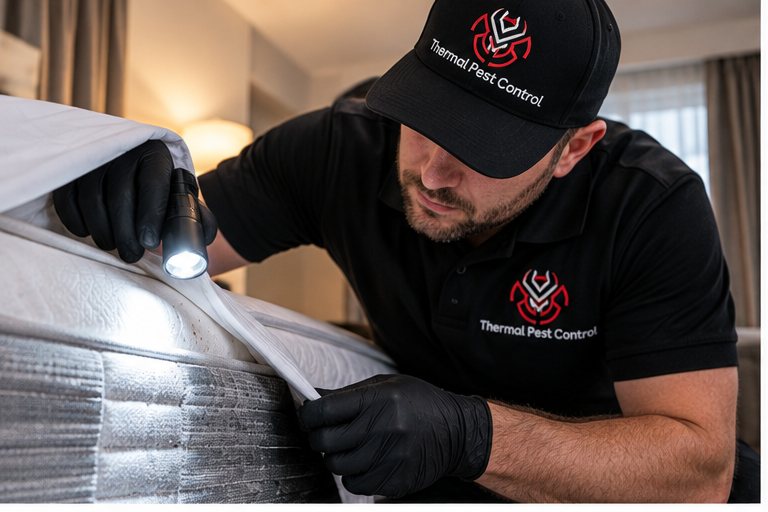
- Open everything that can hold a bug: bed bases, headboards, bedside drawers, the edges of the carpet and the skirting. Our guide to where pest controllers treat lists the usual places.
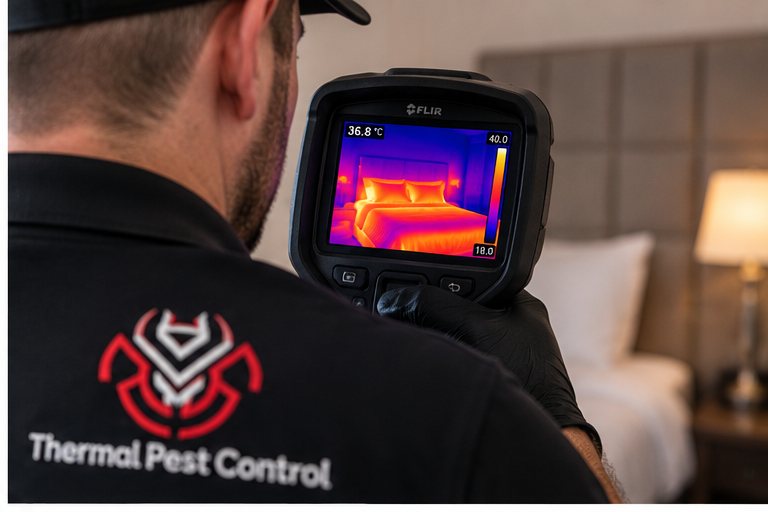
- On a heat day, bring the room up and hold it there, and use the thermal camera to find the cold spots before the day is called finished.
- On a chemical course, work the residue into seams, frames and skirtings, then come back for the follow-up visits rather than leaving the household to judge whether they are needed.
- In a shared building, say where a light residual at the edges makes sense after heat, and whether the next-door flat is worth raising with a landlord.
- Tell you exactly what to do before and after, and explain why.
Your Half of the Job
None of this is difficult, but every item on it is something we have no control over once we have left:
- Keep sleeping in your usual bed. Moving to the sofa or a friend’s spare room usually spreads them to a second place.
- Do not throw out the mattress or the bed unless we advise it. Carrying either through the home spreads them along the way.
- Empty and wash what we ask you to, including drawers and the inside of a storage bed; the guides on chests of drawers and ottoman and storage beds explain what that means in practice.
- Deal with the soft things that sit on the floor or in cupboards: see bean bags and floor cushions and sleeping bags.
- Leave shop sprays and foggers alone. They tend to scatter bugs into places that are harder to reach.
- Tell us about anything you see after treatment instead of waiting to see if it goes away.
Choose the Treatment You Can Actually See Through
Heat and chemical both work when they are done fully. The question is which one your household can complete without gaps. Heat is usually one visit and kills the eggs as well, but it takes most of a day, needs everyone and every pet out of the rooms, and needs heat-sensitive things such as aerosols, candles, medication, vinyl, plants and some electronics taken out first. It costs more.
Chemical costs less and each visit takes one to two hours, with the room usable again once dry. In exchange, you strip and hot-wash the bedding and clear the floor before every visit, not only the first, and you keep the follow-up appointments. A household that will struggle to do that twice is often better served by heat. The heat treatment page for the borough and the chemical treatment page describe each one as it runs in local homes.
Between Visits and After the Last One
After a chemical visit, the residue only works on bugs that walk across it, so the person who was being bitten keeps sleeping in that bed and draws any survivors or new hatchlings out over it. The odd sighting in the first days is part of that, not a reason to give up on it. After heat there is nothing left behind, so the room goes back to normal once it has cooled.
Either way, the weeks afterwards are when a re-introduction shows up. Check the bed seams now and then, keep luggage and second-hand furniture off the beds until checked, and ring if you see something. Our guide to the weeks after treatment sets out what is normal and what is not.
Areas Across Croydon
Each area page takes one household situation that tends to cause a missed step. Croydon Town Centre covers renting through a letting agent, Thornton Heath a shared bathroom and laundry basket, Norbury whether children should stay with relatives, and South Norwood reclaimed doors and timber. Addiscombe deals with a lodger who works in their room, Purley rooms that are rarely used, Coulsdon belongings going into a care home, and New Addington a hand-me-down bed.
Bedbug Control Across Croydon
Each area page picks one household situation, so choose the one that sounds most like yours.
Bedbug Advice for Croydon
Written up in full for people in the borough, and worth reading before the treatment day.
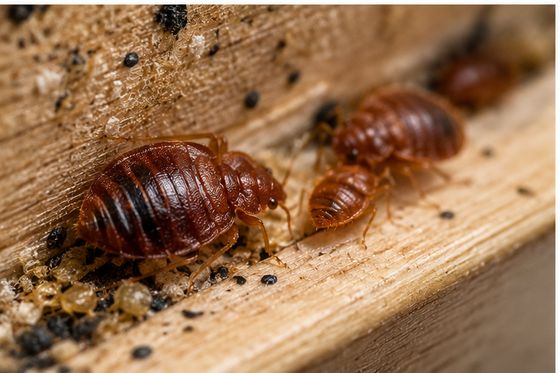
Bedbugs in Drawers
Joints, runners and the folded clothes inside, and what to empty before each visit.
Read more →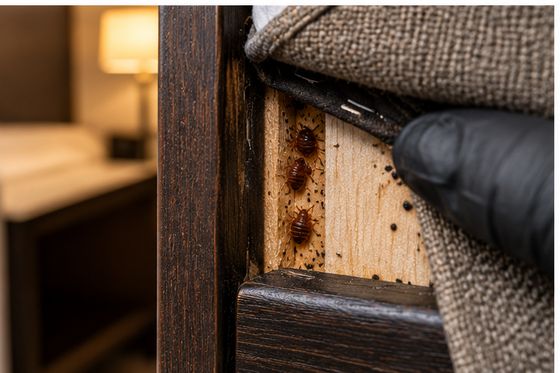
Ottoman and Storage Beds
Lift-up bases, fabric linings, drawers and what is stored inside, checked and treated.
Read more →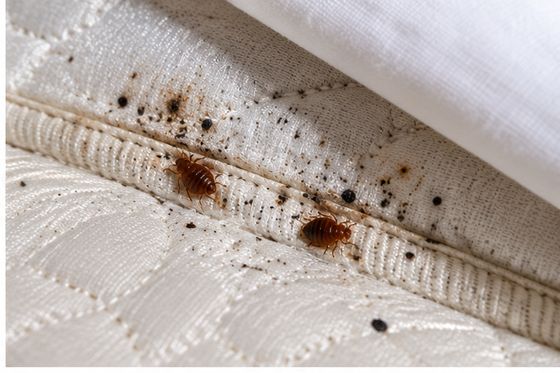
Bedbugs After Moving In
Why signs can take weeks, what an empty flat hides, and whose problem it is.
Read more →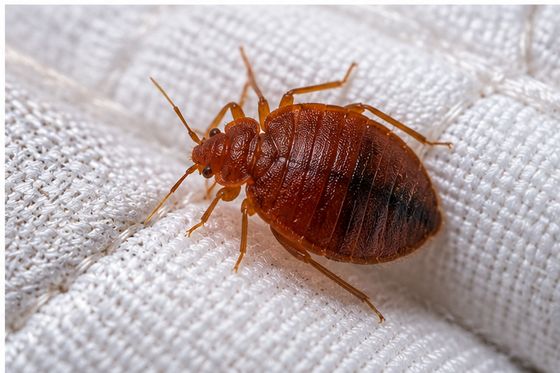
Bedbugs in Sleeping Bags
Seams, zips and stuff sacks, sleepovers and camping, and how to wash or store them.
Read more →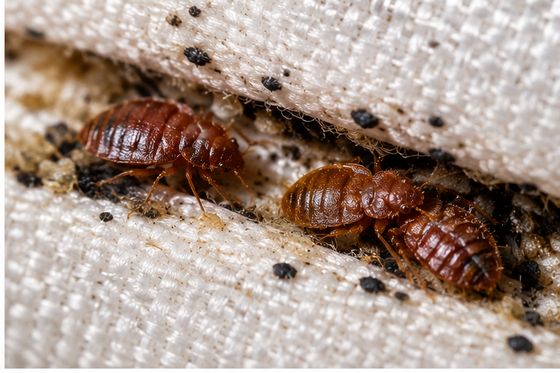
Bean Bags and Floor Cushions
Zips, seams and filling, in children's rooms and living rooms, and what to do with them.
Read more →Bedbug Control Croydon — Questions
How much does bedbug treatment cost?
Treatments start at £220 and inspections start at £120. The final figure depends on the number of rooms and on heat or chemical, and we give it to you on the phone before anything is booked.
I still saw a bug a week after the first chemical visit. Has it failed?
Probably not. Eggs that survived the first visit hatch in that gap, which is why the second visit is booked about 10 to 14 days later. Keep sleeping in the bed and tell us what you saw.
Is heat less likely to need repeating than chemical?
Heat kills eggs as well, so it is usually one visit, but it still depends on every harbourage being reached and nothing being brought back in. A chemical course that is followed through properly finishes the job too.
Should I spray the room myself before you come?
Please do not. Shop sprays tend to push bedbugs deeper into the furniture or into the next room, which makes the treatment bigger.
Do I need to empty every drawer and cupboard in the house?
No, only the furniture in and around the affected rooms, and we tell you which when you book. The drawers guide explains what to do with the contents.
Do bedbug bites need a doctor?
Bites vary, and some people do not react at all. A pharmacist or GP can help with a skin reaction. Call 999 if anyone shows signs of a severe allergic reaction.
We rent. Who arranges and pays for treatment?
It depends on the tenancy and on how the bedbugs arrived. Report it to the landlord or agent in writing straight away. We are pest controllers, not legal advisers, but we will speak to whoever is arranging the work.
Bedbug Treatments in Croydon
Every service has its own page for Croydon: heat, chemical, hotels, commercial premises and inspections.
Covering Croydon
Tell Us About the Property
Tell us which rooms and beds are affected and whether anything has been tried already, and we will ring back with a price.