

Two Kinds of Home, One Problem
A lot of the housing here falls into one of two groups. There are the houses of the Becontree estate and the streets around it, put up by the London County Council between the wars: brick terraces and short runs of houses with small bedrooms, a staircase in the middle and a party wall on at least one side. And there are the newer blocks, most visibly at Barking Riverside, where people live in flats off a shared corridor with a lift, a bin store and a managing agent.
Bedbugs are not interested in the age of a building. They arrive in luggage, second-hand furniture and visitors’ bags, and they settle wherever someone sleeps. The age of the building matters for a different reason: it decides how the treatment has to be planned, how far the problem is likely to have travelled, and who you need to talk to before anything is booked.
Treating an Interwar Council House
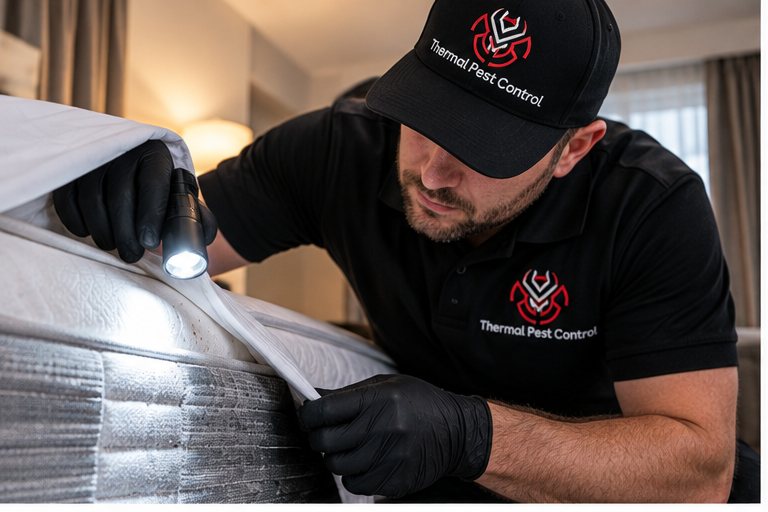
In a house, the question is usually how many rooms are involved. Bedbugs start where someone sleeps, and in a family house that can mean three or four bedrooms plus a sofa downstairs that somebody dozes on. The first job is to find out which rooms actually have them, which is what an inspection is for.
If it is one bedroom, chemical treatment is often the sensible choice: a residual insecticide worked into the seams, the bed frame and the skirtings, and a second visit ten to fourteen days later for anything that has hatched in between. If it has reached several bedrooms, heat treatment starts to make more sense, because it deals with eggs as well and usually finishes in a single visit. The Chadwell Heath page goes through that choice for a larger family house.
The party wall is the other thing to think about. Bedbugs can travel through gaps around pipes and along skirtings into the house next door, and back again. If the neighbours have noticed bites too, the Becontree page covers what that means for your treatment.
Treating a Newer Flat
Newer flats tend to be compact, often open-plan, with the bedroom a few steps from the living area. That makes heat a good fit: the whole flat can be brought up to a temperature bedbugs cannot survive in one day, checked with a thermal camera for cold spots, and handed back once it has cooled.
The catch is that heat leaves nothing behind. In a block where the flats share service risers and corridors, we may put a light residual product along the edges afterwards, so that anything coming back in from a neighbouring flat has something waiting for it. Chemical treatment works in a flat too, and costs less, as long as you can put up with the follow-up visit.
A new flat is not protected by being new. The Barking Riverside page explains why, and where the managing agent fits in when more than one flat is involved.
Renting From the Council or a Housing Association
Many homes in the borough are rented from the council or from a housing association, and that changes the first step. Before you pay anyone, report the problem to your landlord in writing. Who arranges the treatment and who pays for it depends on your tenancy agreement and on how the bedbugs got there, and that is something to settle with the landlord rather than guess at. We are pest controllers, not legal advisers, so we will not tell you what your tenancy says.
What we can tell you is what to put in that report, and what usually happens after it goes in. Our guide on reporting bedbugs to a council or housing association landlord covers both. If you decide to book a treatment yourself, ring us and we will talk it through.
What It Costs
Bedbug treatments start at £220 and inspections start at £120. The final figure depends on the number of rooms and on whether it is heat or chemical. Heat costs more than chemical because of the equipment and the day it takes on site. You get the figure on the phone before anything is booked, so there is no surprise on the day.
The Week Before We Arrive
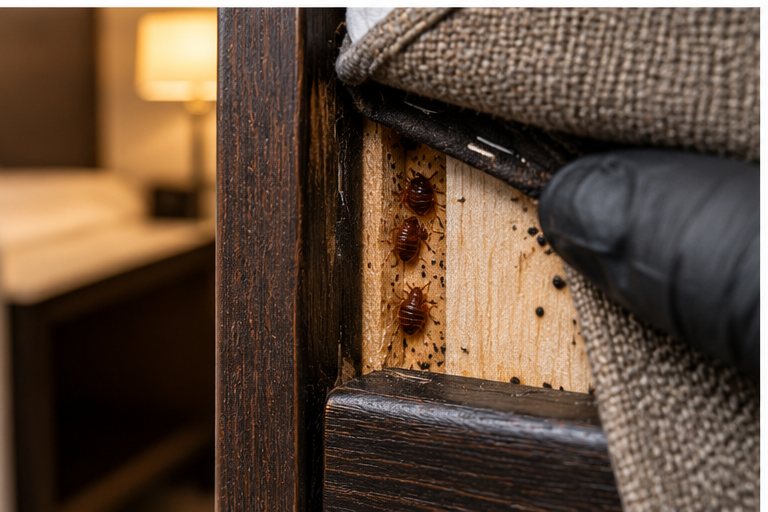
Most of the damage done to a bedbug problem is done in the days before treatment, with good intentions. A few things are worth knowing:
- Keep the bed where it is. Do not throw out a mattress or a bed frame unless we advise it. Dragging it through the house spreads them. If something really does have to go, read getting rid of furniture without spreading them first.
- Keep sleeping in your own bed. Moving to the sofa or the spare room usually takes them with you. If the sofa is already where they are, see bedbugs in the sofa, not the bed.
- Carry on with work and school. The worry about taking them out of the house is understandable; how likely it is, and what to do with clothes and bags, is set out separately.
- Put the shop spray down. It tends to push them deeper into the frame and the walls, which makes the professional job harder.
People often ask where the bedbugs came from. Sometimes the answer is a holiday or a second-hand bed; sometimes it is never found. With five rail lines running through the borough, the commute gets blamed a lot, and we look at how fair that is in its own guide.
How a Job Goes, Start to Finish
- You ring 0800 955 1018. Tell us what you have seen, how many rooms, and whether the home is owned, privately rented or rented from the council or a housing association.
- We confirm it. If nobody has actually seen a bedbug, an inspection comes first, so you are not paying for a treatment you do not need.
- We agree the route. Heat or chemical, how many rooms, and the price, before anything goes in the diary.
- You get the preparation list. For chemical, bedding stripped and hot-washed and floors cleared. For heat, the heat-sensitive items to take out, and pets out for the day.
- We treat. One to two hours a visit for chemical, most of a day for heat.
- We follow up. The second chemical visit ten to fourteen days on, or a check after heat if anything is still turning up.
Bedbug Control Across Barking and Dagenham
Each of these pages takes a single question and deals with it in full, so start with the one that sounds most like your situation.
Bedbug Advice for Barking and Dagenham
Written up in full for people in the borough, and worth reading before the treatment day.
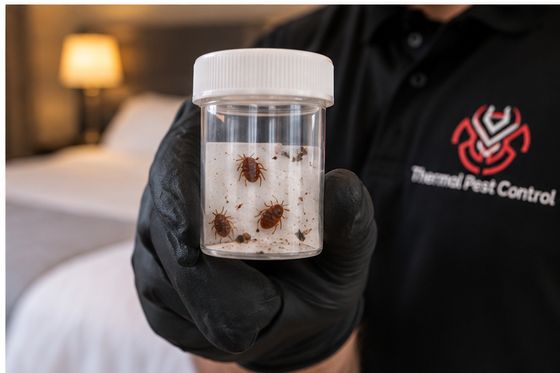
Reporting Bedbugs to Your Landlord
What to write, what to keep, and what a social landlord usually does once the report goes in.
Read more →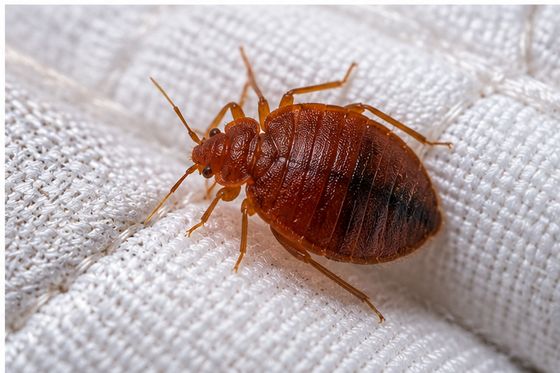
Bedbugs on Public Transport
How bedbugs travel on trains and buses, and which worries are worth having.
Read more →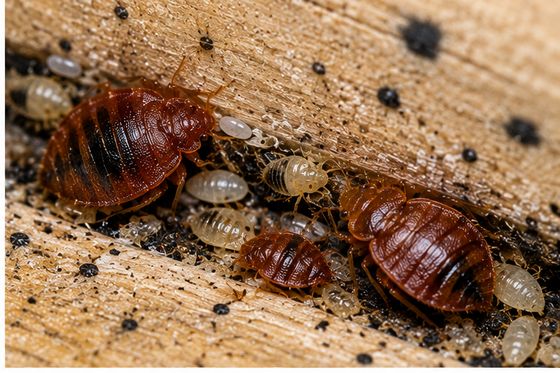
Bedbugs in the Sofa
Where bedbugs hide in a sofa, how it gets treated, and when it is not worth keeping.
Read more →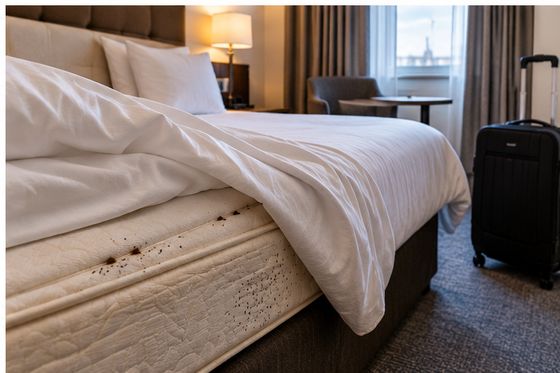
Bedbugs on Clothes, at Work and School
How likely it is to take bedbugs out of the house, and what to do with clothes and bags.
Read more →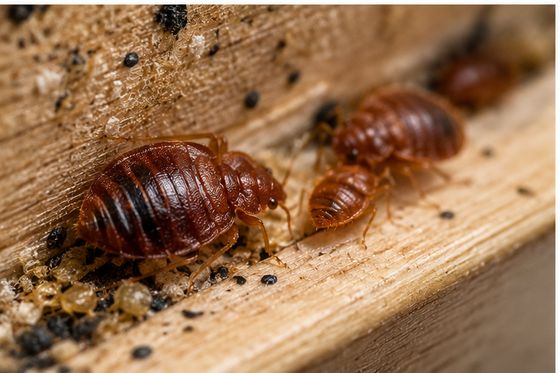
Getting Rid of Infested Furniture
Why most furniture can stay, and how to move out what cannot without scattering bedbugs.
Read more →Bedbug Control Barking and Dagenham — Questions
Do you cover the whole borough?
Yes, every part of it, from the town centre and the river to Chadwell Heath and Marks Gate. Ring 0800 955 1018 or use the form and tell us where you are.
I rent from the council. Should I call you or them first?
Report it to your landlord in writing first, even if you then decide to book us yourself. Who pays depends on your tenancy and the cause, and a written report keeps a clear record either way.
Is heat or chemical better for a council house?
Neither by default. One bedroom often suits chemical; several bedrooms, or a problem that has been going for a while, usually suits heat. See the heat and chemical comparison for the detail.
My flat is brand new. How can it have bedbugs?
Bedbugs come in with people and their belongings, not with the building. A new flat is as easy to move into for them as an old one.
Do I need to throw my mattress away?
Usually not, and please do not before we have seen it. A mattress can be treated, and carrying an infested one out through the house is one of the easiest ways to spread them.
How much will it cost?
Treatments start at £220 and inspections at £120. The final price depends on the number of rooms and on heat or chemical, and you get it on the phone before anything is booked.
The bites are really bothering me. What should I do?
Bites vary a lot, and some people do not react at all. For itching or a skin reaction, a pharmacist or GP can help. If there are signs of a severe allergic reaction, call 999.
Bedbug Treatments in Barking and Dagenham
Every service has its own page for Barking and Dagenham: heat, chemical, hotels, commercial premises and inspections.
Covering Barking and Dagenham
Tell Us About the Property
Tell us roughly where you are, how many rooms are affected and who your landlord is, if you rent.