
- The Life Cycle, in the Order It Matters
- Why the Second Visit Sits at Ten to Fourteen Days
- What Makes It Three Visits
- How You Know It Is Actually Finished
- When Two Visits Will Never Be Enough
The number of visits is set by how long a bedbug egg takes to hatch and how long the young take to start moving about. Everything else follows from that.
The Life Cycle, in the Order It Matters
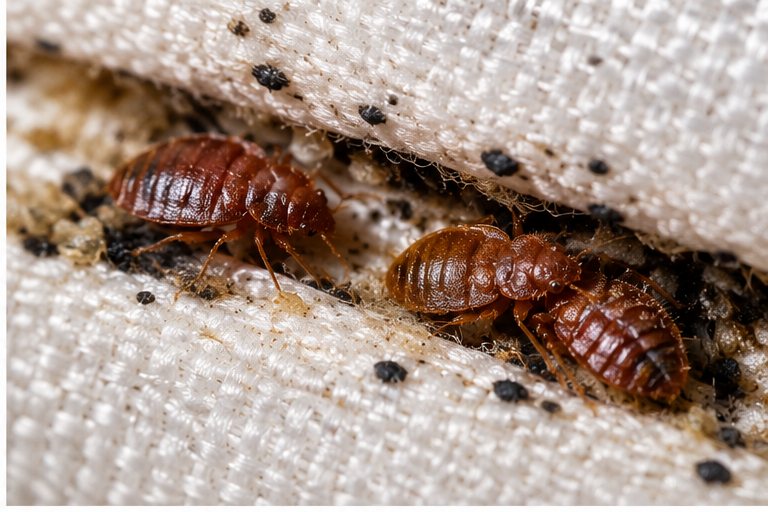
- Egg — glued into a crack, coated against drying out, roughly a millimetre long. Hatches in about a week to a fortnight in a heated London home, slower in a cold one
- First stage nymph — emerges hungry, pale and barely visible. It must take a blood meal before it can moult
- Five nymph stages in all — each one needs a feed to get to the next, which means five separate trips out of the harbourage and across whatever is on the floor
- Adult — about five weeks after hatching in warm conditions. A female then lays a few eggs a day, most days, for months
The point of that list is the middle of it. A young bedbug cannot stay hidden and grow. It has to come out and feed five times, and every one of those trips takes it across a treated surface.
Why the Second Visit Sits at Ten to Fourteen Days
On the first visit everything alive in the treated harbourages is dealt with, and a residual is left where they walk. The eggs already laid are untouched, because the shell keeps the product out.
Those eggs hatch over the following week or two. The gap between visits is timed so that the second treatment lands after the bulk of them have hatched — late enough that there is something to treat, early enough that none of them have reached adulthood and started laying again.
Come back too early and you treat a room full of unhatched eggs for a second time, which achieves nothing. Come back too late and the first of the new generation is already laying, and you are starting over.
What Makes It Three Visits
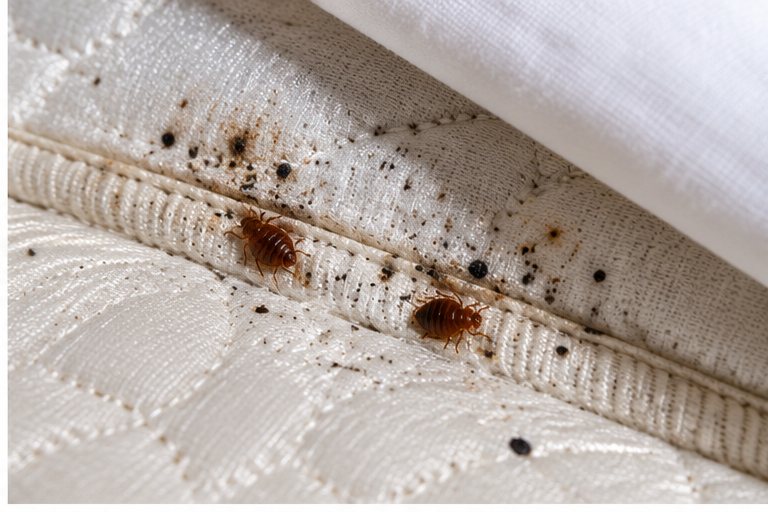
- A long-established infestation — several overlapping generations means eggs at every stage of development rather than a single hatching wave
- A cold room — an unheated spare bedroom stretches the incubation period and spreads the hatch over a longer window
- Heavy furnishing — more harbourage than can be reached thoroughly in one pass
- Previous DIY — bedbugs scattered into wall voids by shop aerosols come back out over weeks rather than days
- A shared building — a steady trickle from next door is not a treatment failure, but it looks exactly like one
How You Know It Is Actually Finished
Not by the absence of bites, which lag and vary from person to person. By the absence of new evidence: no fresh spotting on laundered bedding, no live insects in the seams or frame joints after a proper look, nothing on interceptors if we have left them.
Give it a fortnight past the last visit before you decide. Seeing the occasional bedbug in the first two weeks is the treatment working through the population; seeing them in numbers a month later is not.
When Two Visits Will Never Be Enough
If the property is an HMO where only one room is being treated, a flat sharing a wall with an untreated neighbour, or a home where someone is sleeping in a second room, no number of visits to the original bedroom will finish it. That is a scope problem, not a dosage problem, and more visits is the wrong answer to it.
← Back to Bedbug Chemical Treatment London · Bedbug Control London
Related Questions
Can you do it all in one visit?
Not with chemical, no — not honestly. If a single visit is what you need, that is what heat treatment is for.
Do I pay for each visit separately?
No. The follow-up is part of the treatment and part of the price.
What if I still see one after the second visit?
One, occasionally, in the fortnight after: normal. Several, or fresh spotting appearing on clean bedding: ring us, because that is a different conversation.
Bedbug Chemical Treatment London — Advice
Everything else written up for this service, and the service page itself if you would rather just get a price.
Tell Us About the Property
Tell us what you have seen and where, and we will tell you what it needs.