
- Why They Move Away From the Bed
- Wallpaper
- Sockets, Switches and Wall Voids
- Picture Frames, Clocks and Things on the Wall
- How Treatment Reaches Them
- What It Tells You About the Rest of the Home
Why They Move Away From the Bed
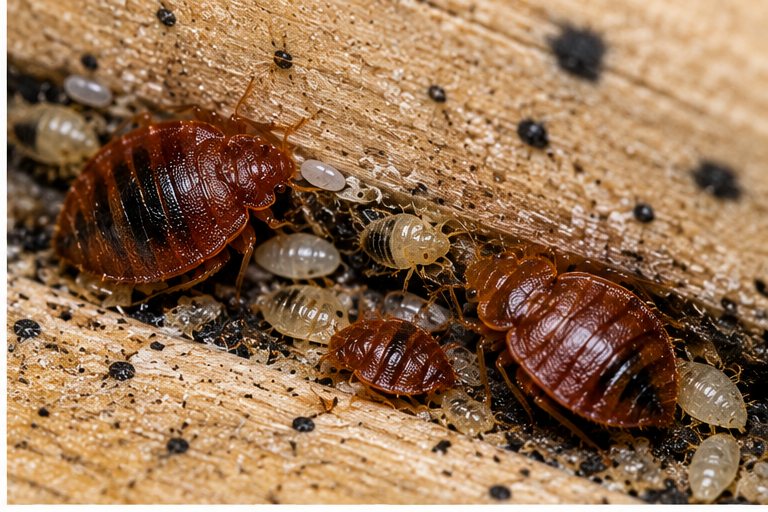
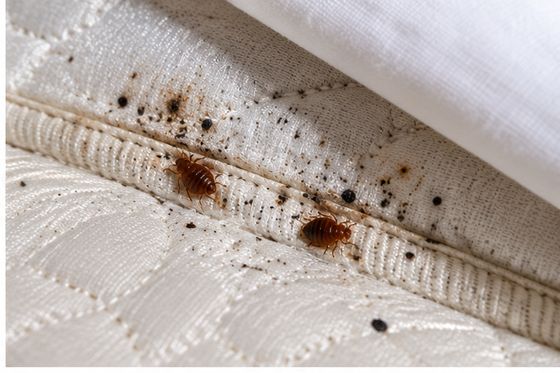
Bedbugs prefer to hide close to where they feed, so the first places they settle are the mattress seams, the frame joints and the headboard. As numbers grow, those places fill up and the bugs look further afield. They move along the skirting, up the wall behind the headboard, and into any narrow, dark gap they can squeeze into. By then they may be several feet from the bed and still coming back to it each night.
That is why the spots described here are rarely where anyone finds them first. For the places commonly overlooked in an ordinary inspection, our guide to where bedbugs hide goes into more detail. This page is about the later stage, when the walls themselves are involved.
Wallpaper
Where wallpaper has lifted at a seam, at the top of the skirting or along the ceiling line, there is a thin, dark, flat gap behind it that suits a bedbug perfectly. Look for the same dark spotting you would see on a mattress, running along the edge of the paper. Old, layered paper in an older house can hide a surprising amount.
Do not strip it yourself before treatment. Pulling paper off the wall scatters whatever is behind it around the room. Tell us where it is loose and we will deal with it as part of the treatment.
Sockets, Switches and Wall Voids
Electrical sockets and light switches sit in boxes set into the wall, and the gap around the faceplate leads into the void behind. It is warm, dark and undisturbed. In a converted house, those voids and the cable runs between them can also connect to other rooms, and sometimes to the flat next door.
Please do not unscrew a socket or switch plate to look, and never spray anything into one. That is an electrical hazard. We treat these voids with care as part of the job, usually with a dust rather than a liquid.
Picture Frames, Clocks and Things on the Wall
The back of a picture frame against a wall is a sheltered, undisturbed pocket, and the paper backing on many frames has its own gaps. The same goes for wall clocks, mirrors, shelves and the tops of curtain poles. Take one down and look at the back and at the wall behind it; spotting or shed skins there are a clear sign.
- Leave frames where they are until we have seen them, or bag them if you take them down
- Do not move them to another room, which carries the bugs with them
- Tell us about anything valuable or delicate on the walls, because it changes how it is handled
How Treatment Reaches Them
Chemical treatment follows the bugs into these places with a residual insecticide along the skirting and edges, and dust into voids and behind faceplates where a liquid should not go. Because it does not reliably kill eggs, it is usually two visits, sometimes three, about 10 to 14 days apart. Details are on the chemical treatment page.
Heat treatment raises the whole room, walls and contents included, to a temperature bedbugs cannot survive. The areas that are slowest to warm are exactly these: an external wall, a void behind a socket, the back of a heavy mirror. That is why the room is checked with a thermal camera for cold spots before the heat is finished. The heat treatment page explains the day. In a shared building, a light residual at the edges afterwards covers anything coming back through the wall.
What It Tells You About the Rest of the Home
If bugs have reached the walls of one room, it is worth asking whether they have also reached the next room along. Mention any spotting you have seen elsewhere when you ring, because it affects the number of rooms and the price. Treatments start at £220. In a flat that shares walls with neighbours, the Lewisham overview explains why the building matters too.
Related Questions
Can bedbugs live inside walls?
They hide in gaps and voids in and behind walls, such as behind loose wallpaper and around sockets, usually once an infestation is established.
Should I take the socket covers off to check?
No. It is an electrical hazard. Tell us where you suspect them and we will deal with it.
Does heat reach bugs inside the wall?
Heat raises the whole room, and we use a thermal camera to find the slow spots such as voids and external walls before the treatment is finished.
More Bedbug Advice for Lewisham
Written up in full for people in the borough, and worth reading before the treatment day.
Tenant or Landlord: Who Arranges It?
Private renting and bedbugs: reporting it, who books, and what each side does.
Read more →
Do Mattress Encasements Help?
What a zipped mattress cover can and cannot do, and when it earns its keep.
Read more →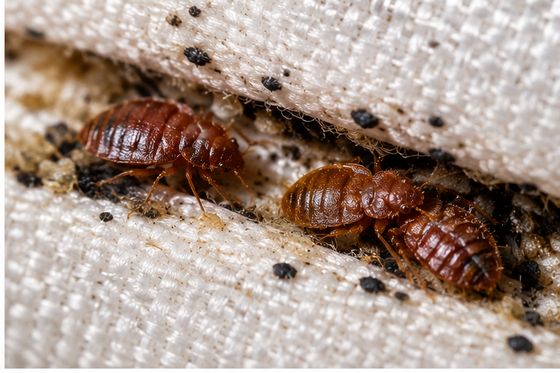
Laundry Bags and Launderettes
Getting infested washing to the machine and back without spreading them.
Read more →
Home Remedies: What They Actually Do
Diatomaceous earth, tea tree, alcohol, steamers and plug-ins, honestly assessed.
Read more →Bedbug Control Across Lewisham
Each area page is written around one situation we deal with.
Bedbug Treatments in Lewisham
Every service has its own page for Lewisham: heat, chemical, hotels, commercial premises and inspections.
Tell Us About the Property
Tell us what you have seen and where, and we will tell you what it needs.