
- Why Headboards Suit Them
- How to Check One
- Treat It or Replace It
- If It Has to Go
- On the Day
People check the mattress because that is where the bites seem to come from. The headboard gets a glance at most. Yet when we lift one away from the wall, the back of it is often where the spotting is heaviest, because it is dark, undisturbed and close to the pillow.
Why Headboards Suit Them
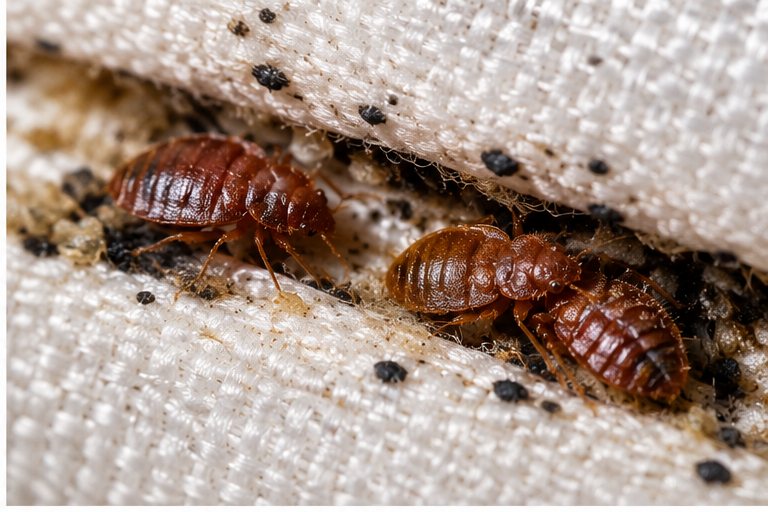
Bedbugs want somewhere tight and dark within easy reach of a sleeping person. A headboard gives them every one of those at once. The gap between the headboard and the wall is exactly the kind of crevice they settle in, and the headboard itself is almost never cleaned or moved.
- Upholstered headboards have piping, stapled fabric, buttons and foam, all of which give them cover.
- Wooden headboards have joints, screw holes and the bolts that fix them to the frame.
- Wall-mounted panels leave a hidden strip between panel and wall, often with a fixing rail behind.
- Divan headboards hang on struts that slot into the base, with a gap at every slot.
How to Check One
You do not need to take it apart. You need a torch and a few minutes.
- Pull the bed out so you can see between the headboard and the wall.
- Shine the torch along the top edge, the sides and the bottom, where it meets the frame.
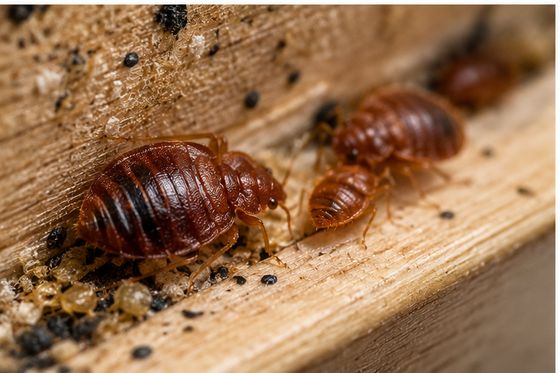
- On fabric, look along the piping and around each button for dark ink-like spots, pale shed skins and small oval insects.
- On wood, look into the joints and screw holes and around the bolts.
- On a wall-mounted panel, look along the wall behind it as far as you can see, and at the fixing points.
If you find something but are not sure what it is, a photograph or a specimen in a sealed bag helps. Our page on bedbugs or something else covers the insects most often mistaken for them.
Treat It or Replace It
Most headboards can be treated. The question is whether treatment can reach every place the insects are, and that depends on how it is made.
A solid wooden or metal headboard is straightforward: joints, holes and the gap behind it are all reachable. An upholstered one is harder, because the insects get under the fabric and into the padding, where a residual insecticide on the surface does not reach them well. Heat treatment does better here, because the heat goes into the padding and kills eggs as well as adults.
Replacing a headboard is worth thinking about when it cost little, is heavily infested and upholstered, or already damaged. Even then, replace it after treatment, not before. A new headboard fitted to an untreated frame and wall will have them within weeks.
If It Has to Go
If we agree it should be thrown out, it needs to leave the flat without shedding bugs on the way. Wrap it fully in plastic sheeting and tape the seams before it moves, and label it so nobody takes it home. Do not stand it on the landing or leave it on the pavement unwrapped. In a block of flats, carrying an infested headboard along a corridor is one of the easier ways to give the problem to someone else.
The wall it was fixed to still needs treating afterwards. The fixing holes, the skirting beneath it and any gap along the wall are where the survivors will be.
On the Day
Leave the headboard where it is unless we ask you to move it; we need to see it in place to treat behind it. Strip the bedding as normal. If the headboard is heavy or wall-mounted, tell us when you ring so we can plan for it. More on the wider list of places we treat is in where pest controllers treat, and in a shared Southwark block it is worth reading the borough page too.
Related Questions
Can I just vacuum the headboard?
Vacuuming lifts some of the insects you can see, but not the ones under fabric or in the fixings, and it does nothing about eggs. Empty the vacuum into a sealed bag outside if you do it.
Should I take the headboard off the wall before you come?
No. Leave it where it is so we can see where they are and treat behind it in place.
Is a fabric headboard always a lost cause?
No. Many are treated successfully, particularly with heat. We tell you on the day if one is too far gone to be worth saving.
More Bedbug Advice for Southwark
Written up in full for people in the borough, and worth reading before the treatment day.
When the Neighbours Have Them Too
Treating your own flat properly when the problem does not stop at your front door.
Read more →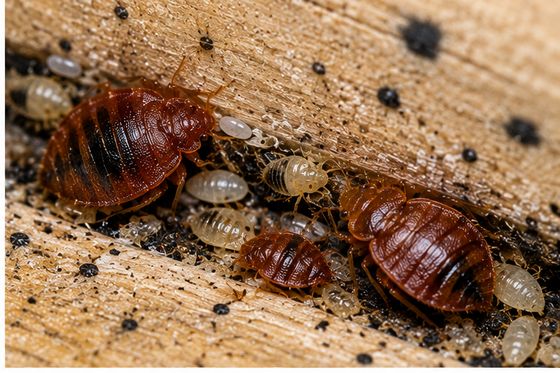
Flat Shares: Getting Everyone Ready
Four people, four rooms and one treatment day: how to share the preparation fairly.
Read more →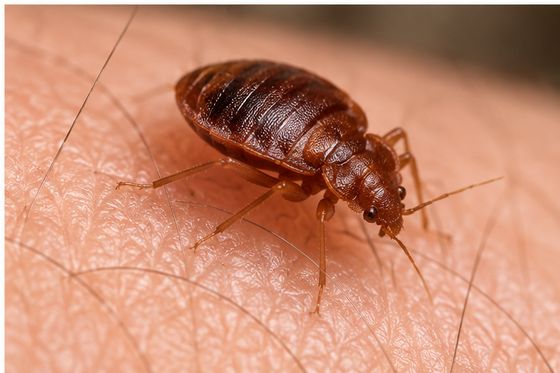
Bites: What Helps and When to See a GP
Plain information on bites: the pharmacist, the GP, and the signs that mean call 999.
Read more →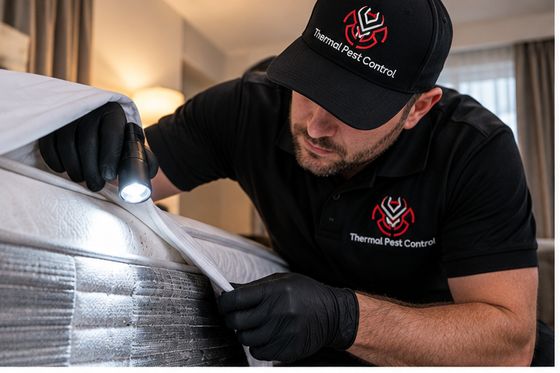
How Much Should You Clear?
Less than you fear, more than you might think: what to bag and what to leave alone.
Read more →Bedbug Control Across Southwark
Each area page is written around one situation we deal with.
Bedbug Treatments in Southwark
Every service has its own page for Southwark: heat, chemical, hotels, commercial premises and inspections.
Tell Us About the Property
Tell us what you have seen and where, and we will tell you what it needs.