
- What a Lift Does and Does Not Do
- How They Really Move Between Flats
- Corridors, Landings and Stairwells
- What to Check in Your Own Flat
- If the Problem Is Next Door
Bedbugs have one need: a person who stays still for hours, usually asleep. Everything about where they settle follows from that. They hide within easy reach of a bed or a sofa that someone sleeps on, come out to feed, and go back into a crack, seam or joint nearby. A space people only pass through gives them nothing to stay for.
What a Lift Does and Does Not Do
A lift car is a poor place for a bedbug to live. Nobody sleeps in it, people stand for a short ride and leave, and there are few of the soft seams and timber joints they prefer. We would not expect to find a colony living in one.
What a lift can do is carry things that already have bedbugs in them. A mattress being taken down to the bin store, a sofa on its way out, a bag of bedding: if any of those brushes against a wall or is put down on the floor, an odd bug may drop off. It is a short hop, not a nest, and the chance of one then finding its way into your home is small compared with the routes below.
How They Really Move Between Flats
The routes that matter are the ones that link one home directly to another. Bedbugs walk, and in a building with neighbours on every side they will follow gaps that lead towards a sleeping person.
- Gaps where heating and water pipes pass through walls and floors.
- Service risers and ducts that run the height of a block.
- The gap along the skirting and under floorboards in converted houses.
- Spaces around electrical sockets and cable runs on a shared wall.
- The gap under a front door, when the corridor outside is carpeted and the flat opposite is affected.
They are more likely to move when a flat is being treated with a spray that scatters them, when an infestation has grown large, or when a flat is left empty and the occupant has gone. That is one reason treating a single flat in isolation can disappoint, and why bedbugs sometimes reappear after treatment.
Corridors, Landings and Stairwells
A corridor is a place for passing through, much like the lift. The exception is anything left sitting in it. Furniture dumped on a landing, a mattress propped against the wall by the bin chute, a pile of bags outside a door: these can hold bedbugs, and they sit in a place everyone walks past. Do not take them in, and report them to whoever manages the building so they are removed properly.
Carpet in a corridor is rarely the problem across its middle. The edges by a door affected on the other side are where you might see something, and even then the number involved tends to be small.

What to Check in Your Own Flat
- Look at your bed first: mattress seams, the corners of the frame, the back of the headboard. That is where anything that got in will end up.
- Check the skirting and the floor edge on any wall you share with a flat you know is affected.
- Look around pipes where they come through the wall behind radiators and under the kitchen and bathroom sinks.
- Check the inside of your front door frame and the threshold if the corridor outside is carpeted.
- Keep bags you have carried through the building off the bed.
Finding nothing is useful information. If you are not sure what you are looking at, an inspection from £120 confirms it before any money goes on treatment.
If the Problem Is Next Door
You cannot treat your neighbour’s flat, and a shop spray on your side of the wall is more likely to push bugs around than stop them. Tell the landlord, managing agent or housing provider in writing that you think it is coming from next door. They are the ones who can arrange for the neighbouring flats to be looked at. How that plays out for leaseholders is on the Bethnal Green page, and the Tower Hamlets page covers the treatment routes for a flat in a shared building.
Related Questions
Can I catch bedbugs just by using the lift?
It is very unlikely. They do not live on people and a short ride gives them little chance to climb on. The bigger risk is bringing home furniture or bags that were left in shared areas.
Should the council or landlord spray the corridors?
Spraying a corridor on its own does little, because bedbugs live near beds, not in passageways. What helps is treating the affected flats and checking the ones around them.
A mattress has been left by our bin store. What should I do?
Leave it alone and report it to whoever manages the building so it is taken away properly. Do not move it yourself or let anyone take it home.
Can bedbugs come through the walls from the flat next door?
Yes, through gaps around pipes, cables, sockets and skirting. That is why we ask about neighbouring flats when you ring on 0800 955 1018.
More Bedbug Advice for Tower Hamlets
Written up in full for people in the borough, and worth reading before the treatment day.
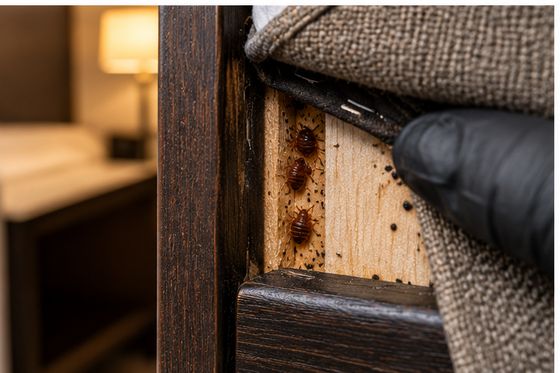
Bedbugs in a Sofa Bed
The folding frame, the thin mattress and the cushions: where to look and how it is treated.
Read more →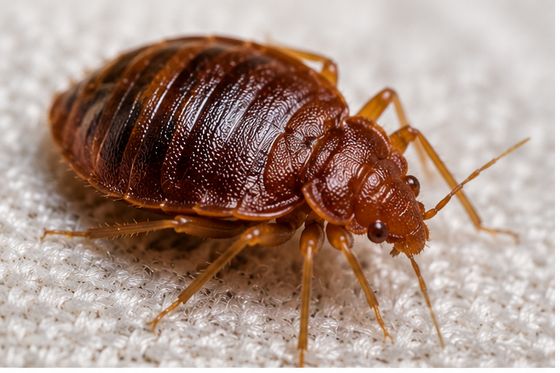
Bedbugs and the Gym
Changing rooms, lockers and kit bags: the honest picture and a routine that takes no time.
Read more →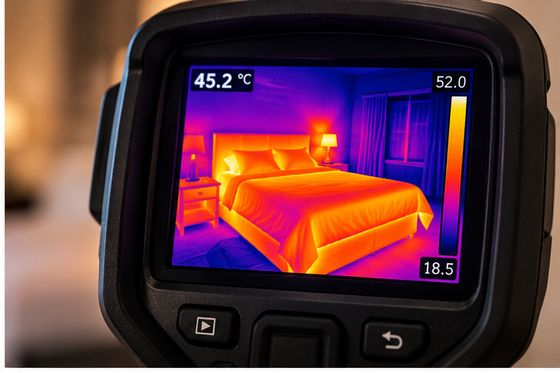
What Affects the Cost
Rooms, method, visits and preparation: what changes the figure and what does not.
Read more →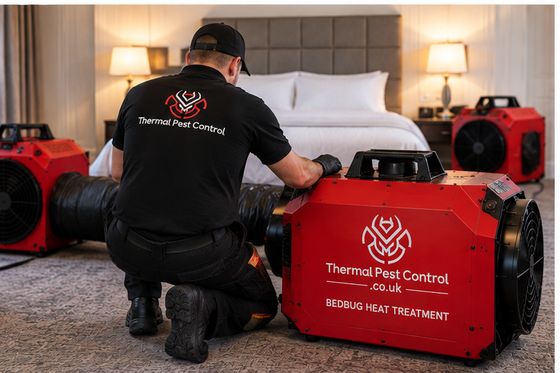
Time Off for Treatment
Stage by stage: the inspection, the preparation, the heat day or chemical visits, and who has to be in.
Read more →Bedbug Control Across Tower Hamlets
Each area page is written around one situation we deal with.
Bedbug Treatments in Tower Hamlets
Every service has its own page for Tower Hamlets: heat, chemical, hotels, commercial premises and inspections.
Tell Us About the Property
Tell us what you have seen and where, and we will tell you what it needs.