
- Why Fabric Storage Suits Them
- How to Check Them
- What Not to Do
- What Happens at Heat Treatment
- What Happens at Chemical Treatment
- Afterwards
Why Fabric Storage Suits Them
A zip-up canvas wardrobe is a metal or plastic frame with a fabric cover stretched over it. Every edge is a seam, every corner has a plastic joint, and the top panel sags into folds. For an insect that hides in narrow dark gaps close to a sleeping person, that is a lot of suitable space.
An open clothes rail offers less in itself, since a bare pole has few hiding places. What matters there is what hangs on it and what sits beneath it: coats brushing the floor, shoe boxes, bags and a pile of things waiting to be ironed.
The clothes pile is the one most people overlook. A chair or a corner by the bed where worn clothes collect is warm, undisturbed and within easy reach of the mattress.
How to Check Them

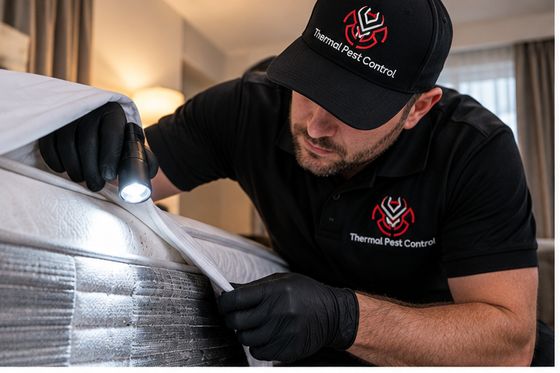
- Use a torch, even in daylight, and start at the corners nearest the bed.
- Run along the seams of the cover, inside and out, and into the zip channels.
- Look at the plastic joints where the frame poles meet, and the ends of the poles if caps come off easily.
- Check the fabric shelves and the folds of the top panel.
- On an open rail, look at the base, the wheels and anything stored underneath.
- Go through the clothes pile item by item over a pale sheet, rather than shaking it out.
You are looking for dark spotting like ink dots, pale shed skins, tiny pale eggs in folds, or the bugs themselves. If you find something, put it in a jar or on sticky tape. If you are not sure, an inspection from £120 settles it. Our London guide to places bedbugs hide that get missed has more on tight spots like these.
What Not to Do
The instinct is to fold the whole wardrobe up and take it to the tip. Please do not do that before we have seen it. Collapsing it shakes bugs out onto the floor, carrying it downstairs drops them on the way, and the bed next to it still has whatever was using the wardrobe as a base.
Do not move the clothes to another room to “save” them either, unless they are bagged and going straight into the wash.
What Happens at Heat Treatment
With heat, the wardrobe, rail and clothes can stay in the room and be treated with it. We open the zips and loosen tightly packed rails so warm air can move through, and the thermal camera shows whether the middle of a dense bundle has come up to temperature. If you can thin out an overstuffed wardrobe beforehand, bag the clothes you take out and leave the bags in the room to be heated too.
Anything heat would damage still comes out first. Check the wardrobe’s pockets and shelves for aerosols, candles or medicines tucked away. The heat treatment page for Havering covers what the day involves.
What Happens at Chemical Treatment
Residual insecticide is not applied to clothes. Before a chemical visit, the clothes come out of the fabric wardrobe and off the rail, go into sealed bags in the room, and are then hot-washed or tumble dried as the labels allow. Items that cannot be washed stay sealed until we have discussed them.
The empty frame and cover are then looked at on the day. Whether they can be treated or are better replaced depends on what we find; the technician will say. The rest of the room is treated in the usual places, and a second visit, sometimes a third, follows 10 to 14 days later. The chemical treatment page explains that course.
Afterwards
Put only clean, dried clothes back. Keep the clothes pile off the chair by the bed, and if you replace a fabric wardrobe, consider standing it a little further from the bed than the last one. Our guide to a child’s bedroom covers the same questions for toys and bedding.
Related Questions
Do I have to throw away my canvas wardrobe?
Not before we have seen it. For heat it can usually be treated where it stands; for chemical, the technician will say on the day whether it is worth keeping.
Do all my clothes need washing?
For chemical, the clothes stored in the treated room need bagging and washing or tumble drying. For heat, clothes left in the room are treated with it.
Is an open rail better than a fabric wardrobe?
The rail itself has fewer hiding places, but the clothes on it and the things underneath still need checking. Neither is a problem once treated and kept away from the bed.
More Bedbug Advice for Havering
Written up in full for people in the borough, and worth reading before the treatment day.
Getting a Child’s Bedroom Ready
Toys, school things, the cot or bed, and how to bring your child along with it.
Read more →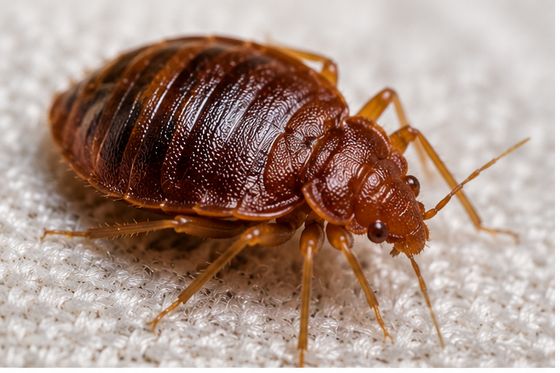
Food, Medicines and the Kitchen
What to move, what can stay, and how heat and chemical treatment differ for each.
Read more →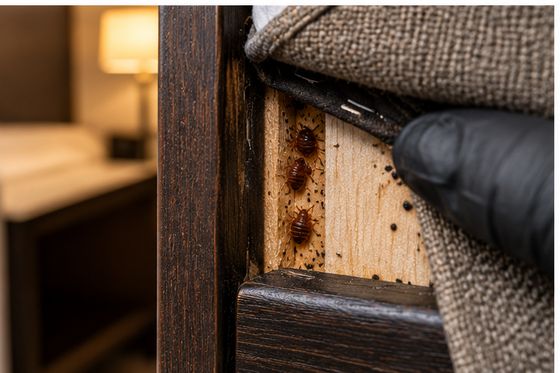
Are Older Houses Worse?
Gaps, boards and cracks give them more cover, but new homes get them too.
Read more →
Only a Hotel Problem?
Where bedbugs really turn up, why homes are where they settle, and what follows.
Read more →Bedbug Control Across Havering
Each area page is written around one situation we deal with.
Bedbug Treatments in Havering
Every service has its own page for Havering: heat, chemical, hotels, commercial premises and inspections.
Tell Us About the Property
Tell us what you have seen and where, and we will tell you what it needs.