

When Everyone Wears Several Hats
Large hotels have written procedures and a head of housekeeping. In a guest house, the person who takes the report may also be the person who changes the beds and answers the phone to us. What a hotel should do after a report, and how a room goes back into use, is on the London hotel bedbug treatment page for the full explanation. What helps a small operator most is deciding a few things now, before it happens:
- who in the team is allowed to take a room off sale on the spot;
- which room a guest moves to if theirs is affected, chosen in advance so it does not share a wall, floor or ceiling with the likeliest candidates;
- where bagged bedding from a suspect room goes, so it is not carried through the building loose;
- who rings us, with the room number and what was seen.
Put it on one sheet behind the desk. When it is late and the owner is not in, whoever is on shift has something to follow.
A Converted Townhouse Is Not a Purpose-Built Hotel
Many small hotels in the borough are period houses joined together, with rooms fitted in wherever they would go: behind the stairs, in the roof, at the back of the ground floor. Party walls are old, floors are timber and pipework runs between rooms that were never designed to be separate. That affects which rooms we look at after a confirmed report.
Expect us to want to see the rooms either side and the rooms above and below, including any that sit across the join between two houses. The London guide to stopping bedbugs spreading between hotel rooms explains the reasoning.
Family Rooms, Bunks and Sofa Beds
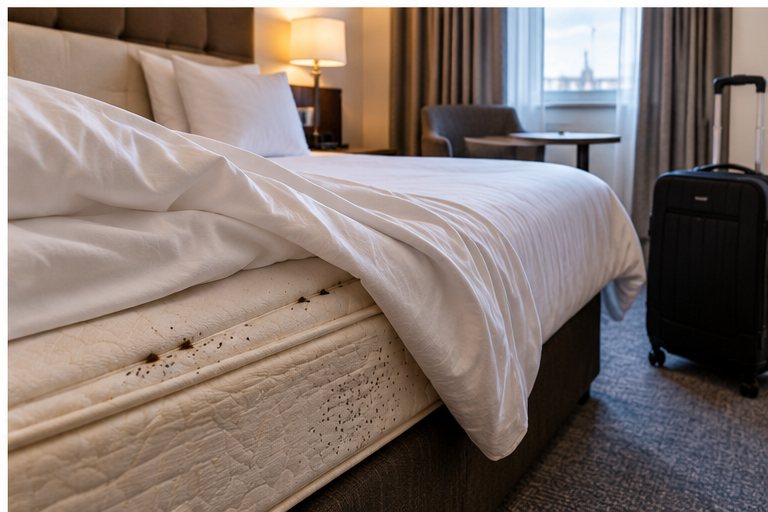
Guest houses often squeeze extra sleepers into a room with a bunk bed, a sofa bed or a fold-out chair. Each of those has joints, hinges and folds that a standard bed does not, and each is easy to forget when a room is checked. Bunk beds in particular have ladders, slats and two mattresses in one frame; bedbugs in bunk beds and cabin beds covers them in detail. Sofa beds should be opened out for every check, not looked at folded.
Which Treatment Suits a Small Hotel
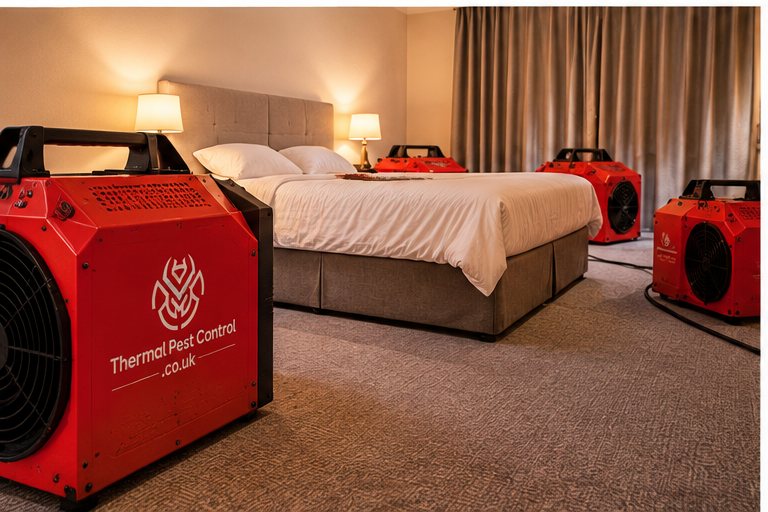
For most guest rooms we suggest heat, because it kills eggs as well and usually needs one visit. The room is out of use for most of a day and can be let again once it has cooled and been made up. Chemical costs less but runs as two or three visits about ten to fourteen days apart, which keeps a room awkward to sell for longer. The heat treatment page for Islington explains what an older building means for the edges of a room.
If two or three rooms are involved, we can often treat them together, which is kinder to your booking calendar than spreading visits across a fortnight. Tell us which nights the rooms are sold and we will work to them where we can.
Your Own Rooms Upstairs
Some owners live in the building, often in a flat at the top or in the basement. If a problem has reached guest rooms, it is sensible to look at the family’s own bedrooms too, and at any staff room with a bed or sofa. Treating the guest side and leaving your own rooms unchecked can undo the work.
Checks Between Problems
A routine look at mattress seams, headboards and bed frames when rooms are turned over costs little and catches things early. If a guest reports bites and you are not sure it is bedbugs, an inspection in Islington confirms it before you spend on treatment or refunds.
Prices and Booking
Hotel work is quoted on the rooms involved. Treatments start from £220, and inspections start from £120. Ring 0800 955 1018 with the room numbers and the nights you can close them, and you get the figure on the phone before anything is booked. The Islington bedbug control page covers the borough more widely.
← Bedbug Control Islington · Hotel Bedbug Treatment London, in full
Hotel Bedbug Treatment Islington — Questions
We only have a few rooms. Is it worth ringing about one report?
Yes. One room found early is a much smaller job than several found late. If you are unsure, an inspection confirms it first.
Can a treated room be let the same night?
After heat, once the room has cooled and been made up, it can usually go back into use. After a chemical visit, once the surfaces are dry, but more visits follow.
Do you need to see rooms in the house next door?
If your hotel runs across two joined houses and the affected room is near the join, yes, we will want to look at the rooms on the other side.
Should we throw out the mattress?
Not before treatment unless we advise it. Carrying a mattress down narrow stairs is one of the easiest ways to spread bedbugs through a building.
What should a guest do about bites?
Point them to a pharmacist, or a GP if a reaction troubles them, and to 999 for signs of a severe allergic reaction.
How is a small hotel job priced?
On the rooms involved. Treatments start from £220 and inspections from £120, and the figure is given on the phone.
Bedbug Treatments in Islington
Every service has its own page for Islington: heat, chemical, hotels, commercial premises and inspections.
Hotel Advice
The guides that go into hotel bedbug treatment in more depth.
When a Guest Reports Bedbugs
Handling the person, not the room. The conversation, the offer, and the review that follows.
Read more →
Treating Without Closing the Hotel
The practical logistics of working inside a live hotel, from access routes to fire alarms.
Read more →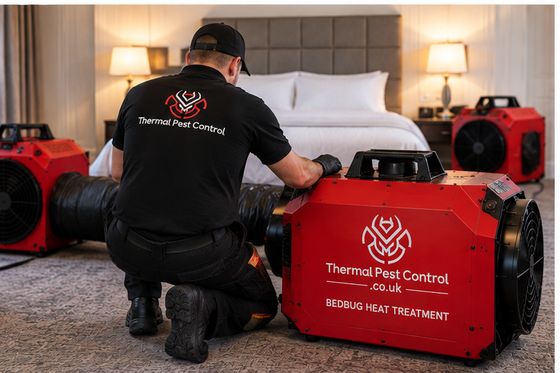
Putting the Room Back Into Service
Not how fast it can go back on sale, but how you satisfy yourself it should.
Read more →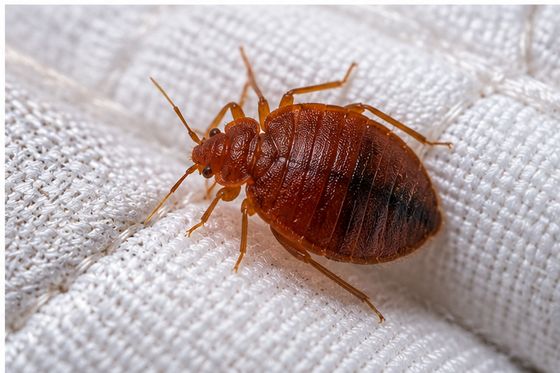
The Ninety-Second Housekeeping Check
A trainable routine your room attendants can run between every stay.
Read more →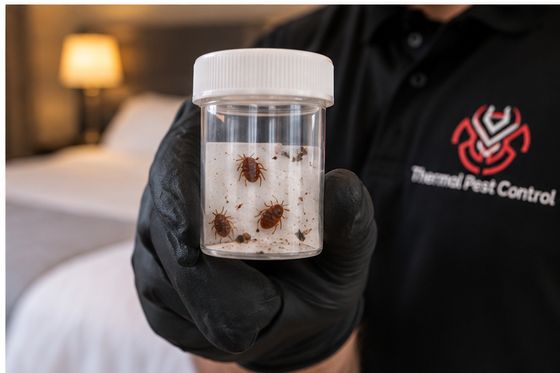
Stopping Them Spreading Between Rooms
Linen, trolleys, vacuums, uniforms and voids. The five routes, and how each is closed.
Read more →Bedbug Control Across Islington
Each area page is written around one situation we deal with.
Tell Us About the Property
Tell us which rooms are affected and which nights you can close them, and we will ring back with a price.