

How the Course Fits a Family House
A typical course in a suburban house runs over about three to four weeks. The first visit takes an hour or two. The second comes about 10–14 days later, once the eggs that were already in the cracks have had time to hatch. Occasionally a third follows after a similar gap. Each visit covers the same rooms, so the house is treated as one job, not room by room on separate dates.
Between visits, the household carries on living there. That is the point of chemical treatment and also its weak spot, because most of what goes wrong happens in the gap rather than on the day.
Which Rooms Go on the List
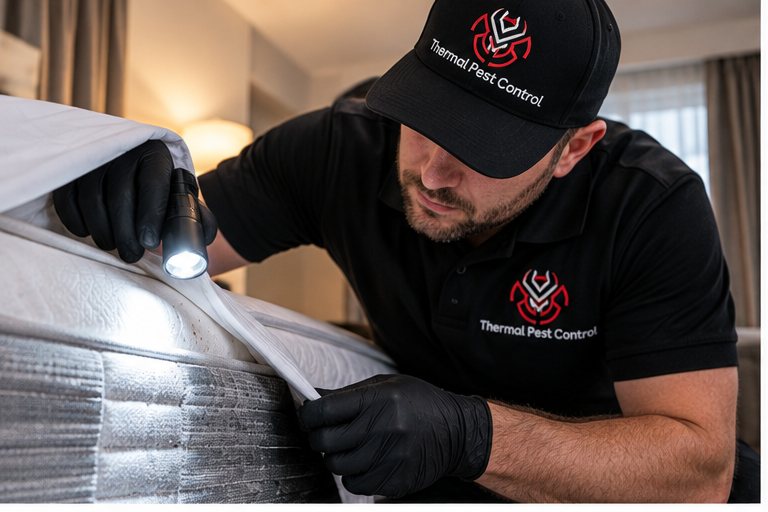
In a house of this age the affected room is usually a main bedroom, but the small front bedroom and the landing outside both matter. Children climb into their parents' bed at night; a cot or a single bed may have been swapped round; the stair carpet is the route between them. Before the first visit we ask who sleeps where, and who has slept where over the last few weeks, so the rooms treated are the rooms actually involved.
If you are not sure how far it has gone, an inspection from £120 answers that first. If it turns out to be in three rooms, or the family has been moving between beds for a while, we would rather tell you now that heat treatment is the better fit than start a course that struggles.
The Weeks Between Visits
After the first visit the treated beds are the place bedbugs will meet the product, which only works if people keep sleeping in them. The family's rules for the gap are short, but each one matters:
- Everyone stays in their own bed. No moving the children in with you, and no camping on the sofa or in the spare room.
- No beds to the loft, the garage or the tip. Carrying a mattress down the stairs drags bugs along the landing and the hall.
- Leave the treated edges alone. Hoover the middle of the floor, but do not wash the skirtings, shampoo the carpet or strip the room to redecorate.
- No sprays or foggers from the shop. They drive bedbugs off the treated surfaces and deeper into the house.
- No overnight visitors in the treated rooms. A grandparent's bag or a friend's sleeping bag can carry them out of the house as easily as in.
- Keep washing the bedding hot and put it straight back on the same bed.
Getting children through the gap without swapping rooms is the hardest part for most families. The Eltham page covers planning treatment days around school and work.
What You Will See in the Gap
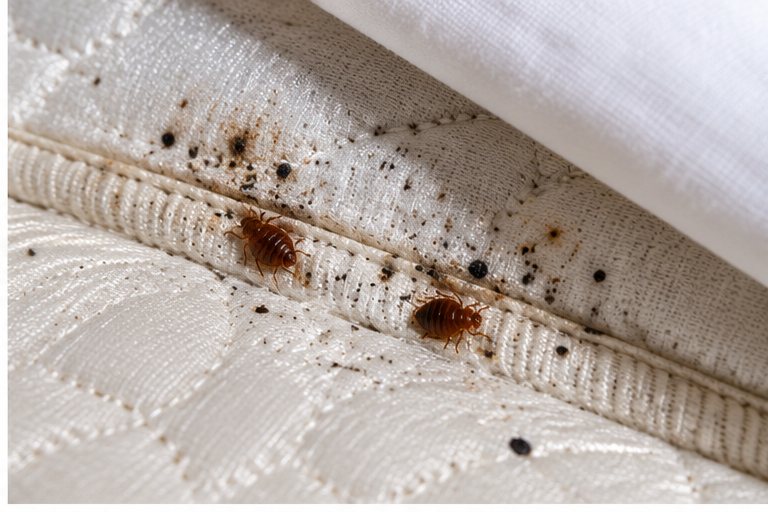
It unsettles people, but seeing a live bedbug a week after the first visit is normal. Those are mostly young ones that hatched after we left and are crossing the treated surfaces. If you catch one, put it in a sealed bag or a jar and keep it for the second visit rather than spraying it.
Bites can carry on for a short while too, and some people never react at all, so bites are a poor guide either way. For itching or a skin reaction, a pharmacist or GP can help; ring 999 for any sign of a severe allergic reaction. Interceptor cups under the bed legs can show whether activity is falling, and our guide to bedbug traps and monitors explains how to read them.
What the Second Visit Is For
The second visit is not a repeat for the sake of it. We look at what has happened since the first, go over the same beds, frames and edges again, and deal with the insects that have hatched in the meantime. Tell us what you have seen, where, and whether anyone has changed beds, because that shapes whether a third visit is needed.
If a room is still busy after the second visit, a third is sometimes the answer. If things have spread despite the course, switching to heat is usually more honest than a fourth. For the full explanation of the product and where it goes, see the London page on bedbug chemical treatment.
Cost and the Bed Frame
Treatments start at £220, and chemical costs less than heat. The price depends mainly on how many rooms are on the list, and we give you the figure on the phone before anything is booked.
Older houses often have older beds: a heavy wooden frame, a divan with drawers, a headboard fixed to the wall. Our guide to bed frames covers how each type is treated. For everything else about the borough, see the Greenwich bedbug control page.
← Bedbug Control Greenwich · Bedbug Chemical Treatment London, in full
Bedbug Chemical Treatment Greenwich — Questions
How long does the whole course take in a house?
Usually around three to four weeks from the first visit to the last, with each visit taking an hour or two and a gap of about 10–14 days between them.
Can my children sleep in their own rooms between visits?
Yes, once the treated surfaces are dry, and they should. Moving them into another bed is one of the most common reasons a course runs into a third visit.
Can I put the old mattress in the loft until it is over?
No. It carries bedbugs through the house on the way up and leaves them somewhere we have not treated. Keep it on the bed unless we advise otherwise.
Do we need to be home for each visit?
Someone needs to let us in and tell us what has happened since last time. You then stay out of the treated rooms until the surfaces are dry.
We are having the house decorated soon. Should we wait?
Treat first and hold off decorating until the course is finished. Painting skirtings or lifting carpets in the gap removes the residue.
What if I rent the house?
Who arranges and pays depends on the tenancy and the cause. Report it to your landlord in writing; we are pest controllers, not legal advisers.
Bedbug Treatments in Greenwich
Every service has its own page for Greenwich: heat, chemical, hotels, commercial premises and inspections.
Chemical Treatment Advice
The guides that go into bedbug chemical treatment in more depth.
How Professional Chemical Treatment Works
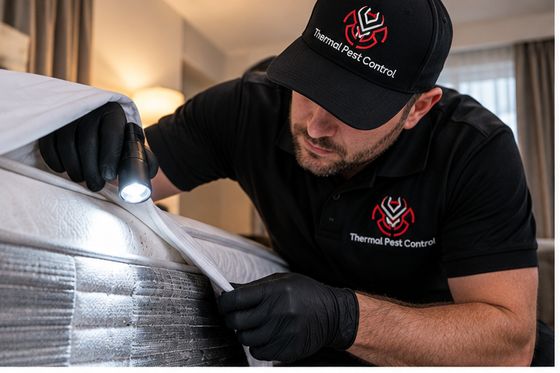
What is actually in a professional treatment, and why it is not the tin from the hardware shop.
Read more →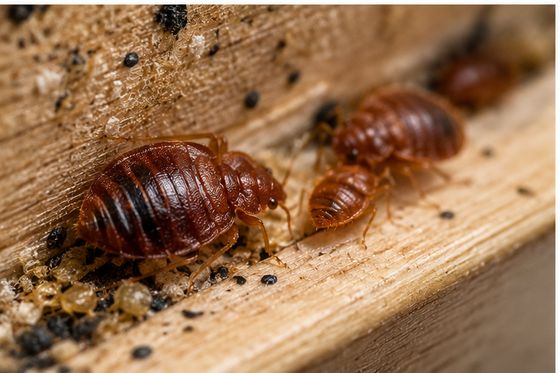
How Many Treatments Does It Take?
The bedbug life cycle sets the number, not the pest controller. Here is the timetable.
Read more →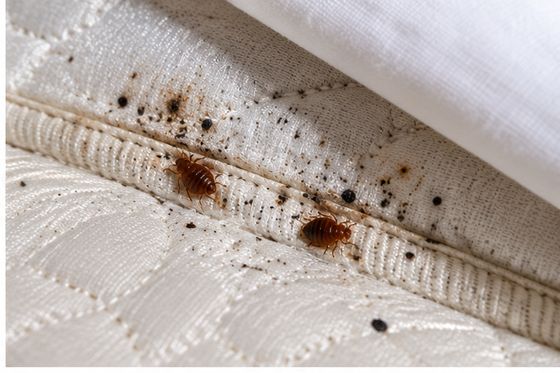
What Happens After the Treatment
Day one to week six, what you will actually see, and when to stop worrying.
Read more →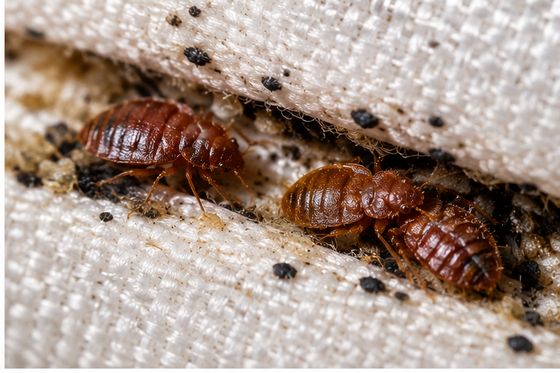
Why Bedbugs Reappear After Treatment
Hatching, survival or re-introduction. Three different problems that look identical.
Read more →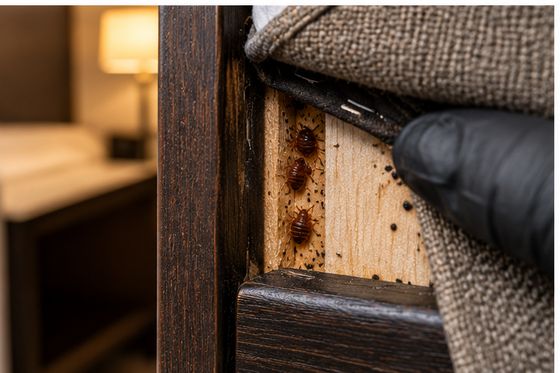
Where Pest Controllers Actually Treat
Why bedbugs choose the places they do, and the places we deliberately leave alone.
Read more →Bedbug Control Across Greenwich
Each area page is written around one situation we deal with.
Tell Us About the Property
Tell us which rooms are affected and who sleeps where, and we will plan the course around your household.