

Why the House Is Treated as One Job
Many of the interwar council houses in Barking and Dagenham, on the Becontree estate and beyond it, share a familiar plan: a narrow staircase rising to a small landing, with two or three bedrooms and a bathroom opening straight off it. Doors are a pace or two apart. For a bedbug looking for the next sleeper, that landing is a short walk along the carpet edge.
So once a second bedroom is involved, we stop thinking in rooms. We plan the heated area as the upstairs as a whole, landing and stairs included, and add anything downstairs that someone sleeps or dozes on. Everything inside that area reaches a temperature bedbugs cannot survive in one pass, which means nothing escapes next door into a room we did last week.
If you are still weighing up whether heat is right at all, the Chadwell Heath page goes through that choice for a family house. This page assumes the decision is heat and shows how the day works. For the full explanation of the method, see our London heat treatment page.
How a Whole-House Day Runs
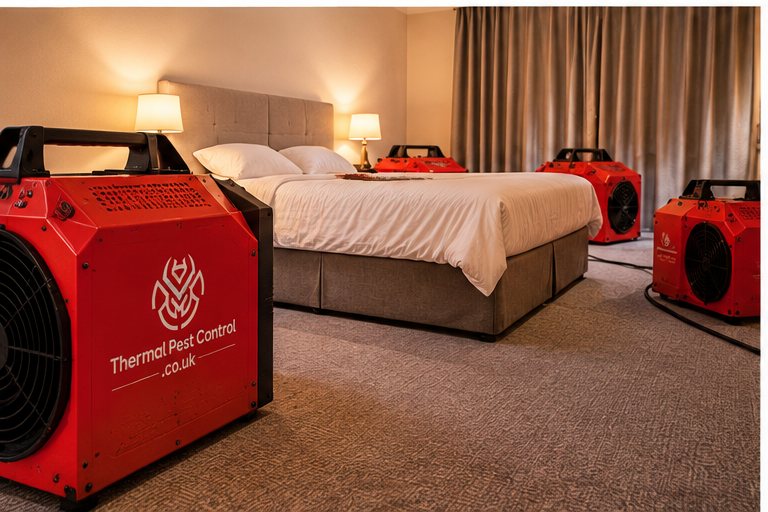
- A walk round every room with you. Bedrooms, the box room, the landing, the stairs and the sofa downstairs. We agree the heated area there and then, so nobody is surprised later.
- The heat-sensitive things come out. You will have had the list when you booked. In a house, the easiest place for them is usually a downstairs room that is not being heated.
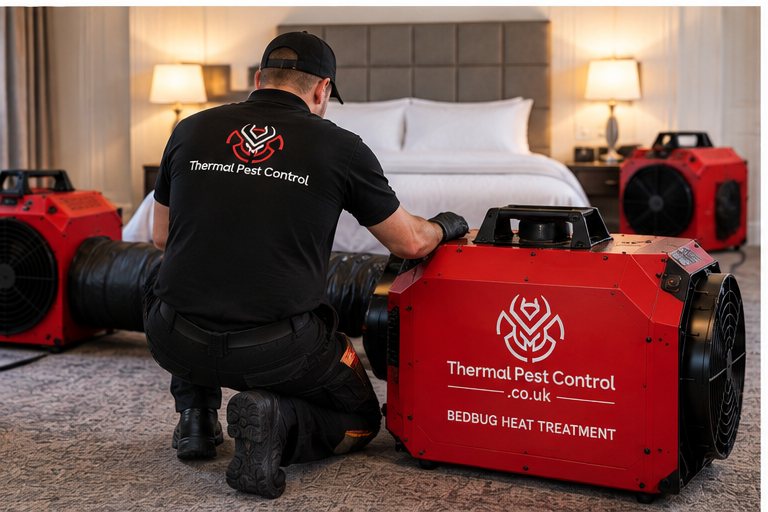
- Heaters go into the bedrooms, fans onto the landing. Moving air along the landing and down the stairs matters, because those are the routes bedbugs use between rooms.
- Each room comes up and is held. We check the corners, the back of the wardrobe, the airing cupboard and the carpet under the bed with a thermal camera, and move kit to any spot that is lagging.
- Cool-down and hand-back. The rooms are yours again once they have cooled. We tell you what we found and what, if anything, needs a second look.
The Parts of a House That Get Missed
A single bedroom has few hiding places we cannot see. A whole house has more, and these are the ones we make a point of including in the heated area:
- The box room. Often used for storage, so nobody sleeps in it, but it is full of bags and boxes that bedbugs can shelter in.
- The airing cupboard. Clean linen goes in and comes out, and so can anything hiding in the folds.
- The landing and stair carpet. Especially where the carpet meets the skirting and where the stair rods or gripper sit.
- The under-stairs cupboard, if coats and bags that go upstairs are kept in it.
- The sofa. If someone has been sleeping on it, it belongs in the job. Our guide to bedbugs in the sofa explains why.
What the Household Does on the Day
Nobody stays in a room while it is being heated, and pets need to be out of the house for the day, not just out of the bedrooms. Depending on how much of the house is in the heated area, you may be able to use the kitchen and front room, or it may be simpler to be out altogether. We tell you which when we plan it, so you can arrange school pick-ups and where the dog is going.
Leave the beds and mattresses where they are. Carrying a mattress down a narrow staircase brushes it along the walls and banisters, and that is how bedbugs end up in rooms that were clean. Clothes in the heated rooms can stay in the wardrobes; for what to do with the school uniform and work bag in the meantime, see our guide on clothes, work and school.
The Shared Wall
Most of these houses are joined to at least one neighbour. Heat does its work during the day and then stops; nothing stays behind in the room once it cools. Where a party wall is involved, we may finish by putting a light residual product along the skirting on the shared side, so anything that comes through later meets something waiting for it.
Whether the neighbours have them too, and how to raise it, is covered on the Becontree page.
Arranging It When You Rent From the Council or a Housing Association
If you are a tenant, report the problem to your landlord in writing before anyone books anything. Who arranges and pays depends on your tenancy and on how the bedbugs got there, and we are pest controllers, not legal advisers. What to put in that report is set out in our guide to reporting bedbugs to a council or housing association.
Where the whole house is concerned, a few practical points are worth raising with your landlord once it is reported:
- Ask which rooms the treatment will cover. A plan that heats one bedroom when three are affected is likely to leave you where you started.
- Ask whether it is heat or chemical, and how many visits are planned.
- Agree a date that lets you empty the heat-sensitive items and get pets looked after for the day.
- Before paying for anything yourself, check with your landlord that they are content for the work to go ahead.
If you book with us directly, heat treatments start from £220. Heat costs more than chemical, and for a whole house the figure depends on how many rooms are in the heated area. We give you that figure on the phone before anything is booked. If you are not sure how many rooms are affected, an inspection, from £120, settles it first.
← Bedbug Control Barking and Dagenham · Bedbug Heat Treatment London, in full
Bedbug Heat Treatment Barking and Dagenham — Questions
Can the whole upstairs really be done in one visit?
Usually, yes. That is the point of heat in a house like this: every room on the landing reaches a temperature bedbugs cannot survive during that one visit, eggs included. It takes most of a day.
Can we stay downstairs while the bedrooms are heated?
Sometimes. It depends on which rooms are in the heated area and where the kit needs to go. We tell you when we plan the job. Pets need to be out of the house either way.
My council is arranging treatment. Can I ask for heat?
You can ask, and it is worth explaining in writing how many rooms are affected. What they provide is up to them and your tenancy. If you would rather book heat yourself, check with them first and then ring us.
Does heat reach the airing cupboard and under the stairs?
If they are inside the heated area, yes. We agree that area with you at the start and check those spots with the thermal camera during the day.
Will the house next door be affected by the heat?
We heat the rooms in your house, not theirs, and tell you if we see signs at the shared wall. What heat does not do is protect you from bedbugs coming back through it, which is why a light residual may go on the shared side afterwards.
How much does it cost to heat a whole house?
Treatments start from £220, and heat costs more than chemical. The figure for your house depends on the number of rooms, and we give it on the phone before you book. The chemical treatment page covers the lower-cost route.
Bedbug Treatments in Barking and Dagenham
Every service has its own page for Barking and Dagenham: heat, chemical, hotels, commercial premises and inspections.
Heat Treatment Advice
The guides that go into bedbug heat treatment in more depth.
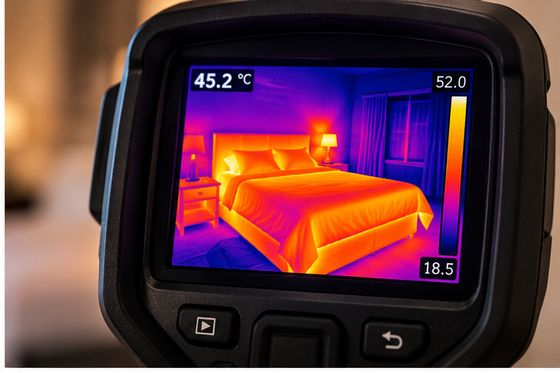
How Heat Treatment Works, and Does It Kill Eggs?
What heat actually does to a bedbug, and why an egg has no defence against it.
Read more →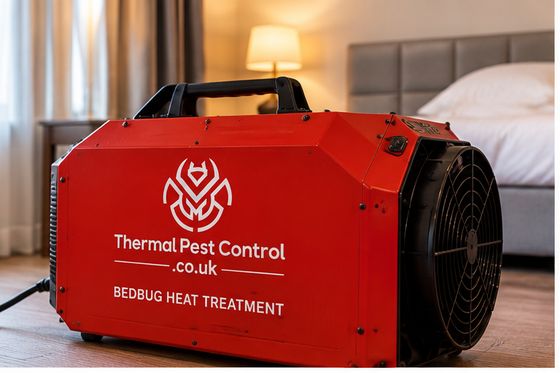
How Long Does a Heat Treatment Take?
Why one London flat takes four hours and another takes ten, and what decides it.
Read more →
Heat or Chemical: How to Choose
Five questions to ask yourself. Answer them honestly and the right treatment picks itself.
Read more →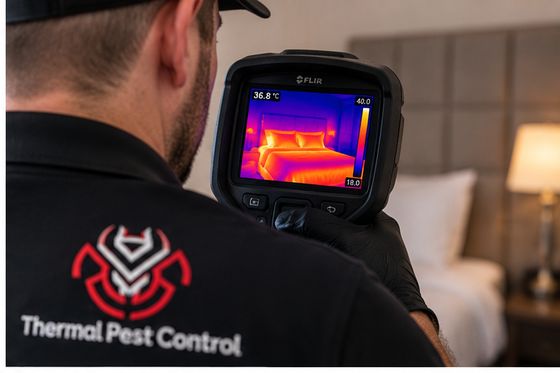
Preparing Your Home for Heat Treatment
What to do the week before, the night before and the morning of. A plan, not a list.
Read more →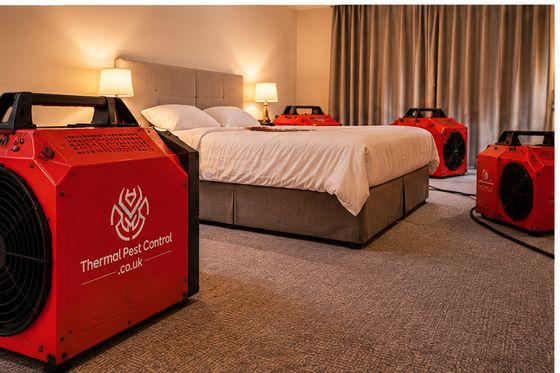
Can Bedbugs Survive a Heat Treatment?
Sometimes, yes. Here are the five ways it happens, and how each one is avoided.
Read more →Bedbug Control Across Barking and Dagenham
Each area page is written around one situation we deal with.
Tell Us About the Property
Tell us how many bedrooms are affected and whether you rent from the council or a housing association, and we will ring you back with a figure.