
- Size and Colour
- Where They Are Laid
- Hatched Shells and What They Tell You
- Why Eggs Decide How Treatment Is Planned
- What to Do If You Think You Have Found Eggs
When people search a bed for bedbugs, they look for the insects. The eggs are easier to miss and harder to get rid of. Knowing what they look like helps you judge what you have found, and it explains why the two treatment routes work differently.
Size and Colour
A bedbug egg is roughly the size of a pinhead: visible to the naked eye if you know what you are looking for, but only just. It is pearly white or cream, slightly curved, and longer than it is wide, a little like a grain of rice at a tiny scale. One end has a small cap, which is where the young bug pushes its way out.
Fresh eggs look slightly glossy. As they get closer to hatching, some people can make out a small darker spot inside, which is the developing bug’s eye. A magnifying glass and a good torch make a big difference; in dim light on a white sheet they are almost invisible.
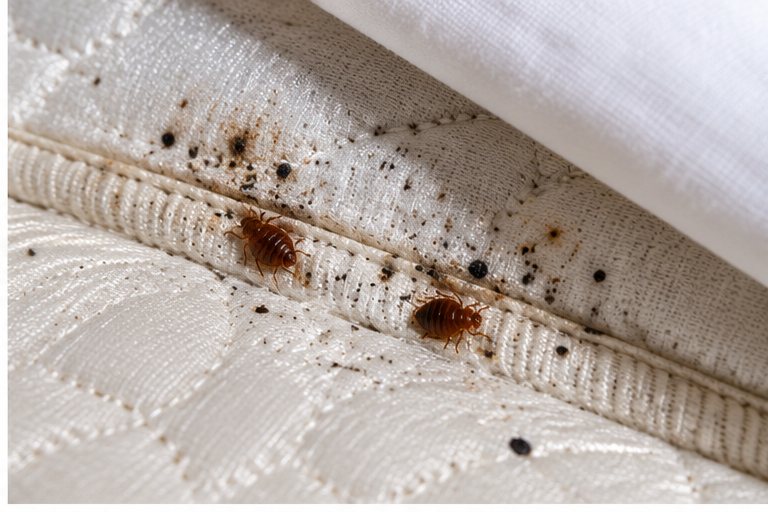
Where They Are Laid
The female lays her eggs close to where she hides and feeds, and she glues them down so they stay put. You will not find them loose on a sheet. You find them stuck into tight, rough places, often in small groups among dark spotting and shed skins:
- The seams, piping and label edges of the mattress.
- The corners and joints of the bed frame, especially where timber meets timber.
- Screw holes, staple lines and the underside of a divan base.
- The back of a headboard and the gap where it meets the wall.
- Folds in upholstered chairs and the edges of the carpet behind the bed.
Because they are glued, shaking out bedding or giving a mattress a quick vacuum leaves many of them behind. That is worth knowing before you conclude a clean-up has worked.
Hatched Shells and What They Tell You
Once an egg hatches, the empty shell stays stuck where it was laid. Hatched shells look flatter, more see-through and sometimes crumpled, with the cap missing at one end. Do not confuse them with shed skins, which are the empty outer casings of growing bugs and are shaped like a bedbug.
Finding shells tells you the problem has been breeding for a while, not just arrived. Finding eggs, shells, skins and bugs of different sizes together tells you it is well settled in that spot. Our London guide to early signs of bedbugs covers the other marks to look for.
Why Eggs Decide How Treatment Is Planned
This is the part that matters most when you are choosing between the two routes.
Chemical treatment uses a residual insecticide in the seams, frames and skirtings. It deals with the bugs that walk across it, but it does not reliably kill eggs. So the plan allows for hatching: usually a second visit, sometimes a third, about 10 to 14 days apart, timed so that newly hatched bugs meet fresh treatment before they can breed. That is the reason for the follow-up, not a sign that the first visit failed. The London guide on how many treatments it takes goes into the timing.
Heat treatment takes the whole room to a temperature bedbugs cannot survive and holds it there, checking cold spots with a thermal camera. Eggs have no defence against that, so it deals with every stage at once and is usually a single visit. The heat treatment page for Barnet describes how the day works in a family house. It costs more than chemical; both start from £220.
What to Do If You Think You Have Found Eggs
- Photograph them in good light, with something for scale beside them.
- Leave them where they are rather than scraping at them or spraying them.
- Check the rest of the bed and the frame joints for bugs, skins and spotting.
- Keep sleeping in your usual bed so the problem stays where it is.
- Ring 0800 955 1018, or book an inspection from £120 if you are not sure what you are looking at.
If the eggs are on curtains, cushions or a chair rather than the bed, the guide to bedbugs in curtains and soft furnishings covers what can be washed and what needs treating.
Related Questions
Can you see bedbug eggs without a magnifying glass?
Yes, just about, if the light is good and you know where to look. A torch and a magnifying glass make them much easier to spot in seams and joints.
Does washing kill bedbug eggs?
A hot wash on the hottest setting the fabric allows, or a hot tumble dry, deals with eggs on bedding and clothes. It does nothing for eggs in the mattress or frame.
Why do I need a second chemical visit if the first one worked?
Because the insecticide does not reliably kill eggs. The second visit catches the bugs that hatched afterwards, before they are old enough to lay eggs of their own.
Are white specks on my mattress always bedbug eggs?
No. Lint, fibres and other debris can look similar. Look for them stuck in seams, in groups, near dark spotting; if in doubt, an inspection confirms it.
More Bedbug Advice for Barnet
Written up in full for people in the borough, and worth reading before the treatment day.
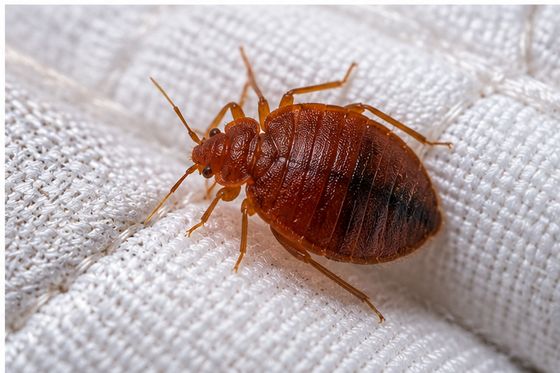
Do Bedbugs Come Out in Daylight?
When they feed and move, and why a bug on the wall at lunchtime is worth a phone call.
Read more →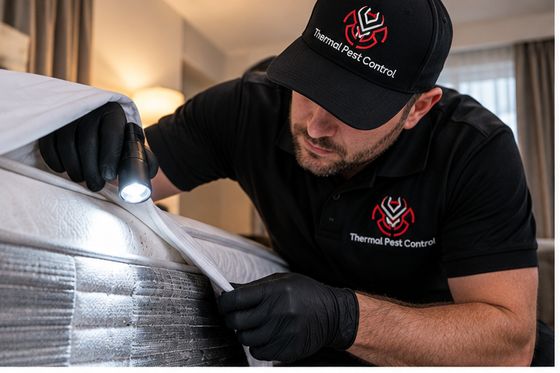
Buying a New Mattress After Bedbugs
When a replacement is worth it, why it waits until after treatment, and how to protect it.
Read more →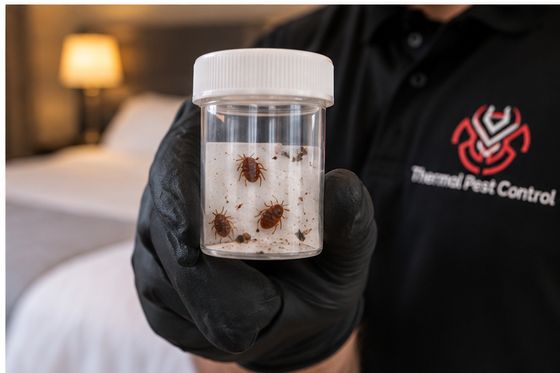
Does Home Insurance Cover Bedbugs?
What to look for in your policy, what to ask the insurer, and the paperwork worth keeping.
Read more →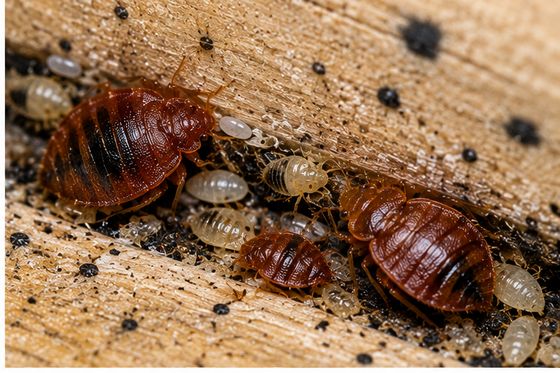
Bedbugs in Curtains and Soft Furnishings
Curtains, cushions, throws and chairs: what goes in the wash, what is treated, what comes down.
Read more →Bedbug Control Across Barnet
Each area page is written around one situation we deal with.
Bedbug Treatments in Barnet
Every service has its own page for Barnet: heat, chemical, hotels, commercial premises and inspections.
Tell Us About the Property
Tell us what you have seen and where, and we will tell you what it needs.