
- Size and Colour
- Why They Are Easy to Miss
- Nymph or Something Else?
- What Finding Nymphs Tells You
- What to Do Next
A bedbug hatches from its egg as a nymph, a miniature version of the adult with no wings and no fully developed colour. It grows through a series of stages, shedding its skin at each one, and it needs a blood meal before every moult. So a nymph is not a different insect; it is a bedbug on its way to adulthood.
Size and Colour
The newest nymphs are about the size of a pinhead or a full stop, and pale: almost colourless, or a faint straw yellow. Against a white sheet they are close to invisible unless they move. As they grow, each stage gets a little larger and a little darker, heading towards the reddish brown of an adult.
The easiest moment to spot one is just after it has fed. The body swells and the blood shows through the thin skin as a bright red or dark spot in the middle of an otherwise clear insect. If you have ever seen what looked like a tiny moving red dot on a pillowcase, that may well have been a nymph.
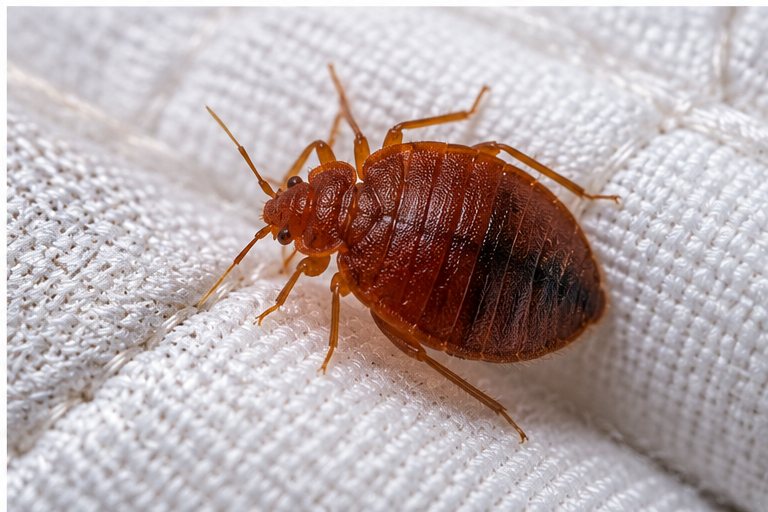
Why They Are Easy to Miss
- They are small enough to pass for a speck of fluff or a crumb.
- Unfed, they are nearly transparent and take on the colour of what they sit on.
- They hide in the same tight seams and joints as adults, often deeper in.
- Many people expect one large brown insect and stop looking once they do not see it.
A torch held low across the fabric helps, because it throws a small shadow even from a pale insect. A white card run along a mattress seam will also push them into view. Our London guide to where bedbugs hide that gets missed lists the places worth checking.
Nymph or Something Else?
Several small pale creatures turn up in bedrooms. Booklice are soft, fast and tend to live around damp paper or plaster. Carpet beetle larvae are hairy and banded. Mites are far smaller and rarely seen as individuals. A bedbug nymph is flat, oval, has six legs you can see with a magnifying glass, and moves at a steady walk rather than a dart.
If you catch one, put it on clear sticky tape or in a small sealed jar and keep it. A photograph through a phone camera zoomed right in is useful too. Our bedbugs or something else guide has more on the lookalikes.
What Finding Nymphs Tells You
An adult on its own could, in principle, be a single hitchhiker that arrived on a bag. Nymphs are different. They mean eggs have been laid and have hatched in your home, so bedbugs are breeding there rather than just passing through.
That is useful information for the treatment. It says there are almost certainly eggs in the room as well, glued into seams and joints. Heat kills eggs along with everything else, which is why it is usually a single visit. Chemical does not reliably kill eggs, so its course is planned in visits spaced to catch what hatches. The borough page on chemical treatment in Ealing sets out how that fits around a household.
What to Do Next
- Keep the specimen, and note which bed and which part of it you found it in.
- Check the other beds in the house, particularly any a child moves between.
- Carry on sleeping where you normally sleep rather than moving rooms.
- Ring 0800 955 1018, or book an inspection from £120 if you are not sure what you caught.
If the nymphs turned up on a child’s bed, the soft toys that share it need dealing with too; see our guide to soft toys.
Related Questions
Can you see bedbug nymphs with the naked eye?
Yes, but only just when they are newly hatched. A torch, a white card and a magnifying glass make it much easier.
Do nymphs bite?
Yes. They need a blood meal at every stage to grow, so they feed just as adults do.
If I only find nymphs and no adults, is it still bedbugs?
It can be. Adults are often tucked deeper into the frame or headboard, while nymphs wander onto the sheet to feed. Keep one and let us look at it.
Do nymphs mean the problem is new?
Not necessarily. They show that breeding is happening, which can be at any stage of an infestation.
More Bedbug Advice for Ealing
Written up in full for people in the borough, and worth reading before the treatment day.
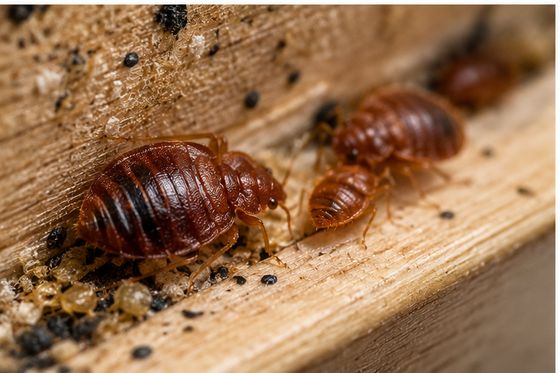
Bedbugs on a Boat
Tight cabins, timber linings and limited power: what changes when the home floats.
Read more →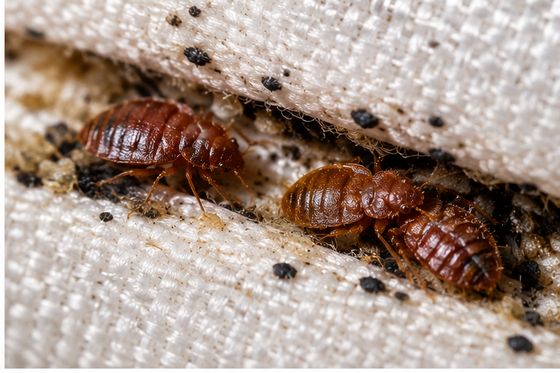
Bedbugs in Soft Toys
Which toys go in the wash, which go in the dryer, and how to handle the one they cannot sleep without.
Read more →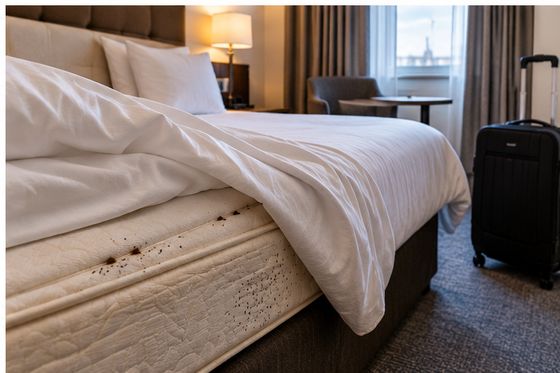
Plastic Storage Boxes
When a box is a hiding place, when it is a shield, and why the lid decides which.
Read more →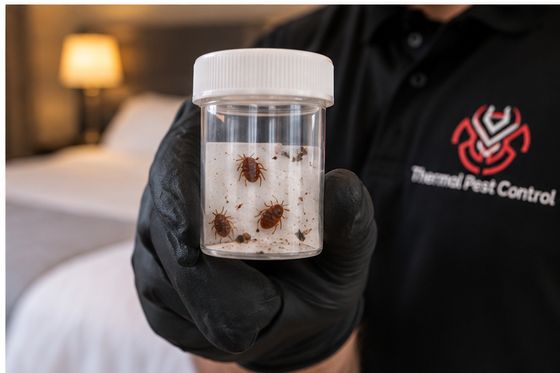
After a Sleepover
The sleeping bag, the pyjamas, and a conversation with the other parents that does not end a friendship.
Read more →Bedbug Control Across Ealing
Each area page is written around one situation we deal with.
Bedbug Treatments in Ealing
Every service has its own page for Ealing: heat, chemical, hotels, commercial premises and inspections.
Tell Us About the Property
Tell us what you have seen and where, and we will tell you what it needs.