
- Why Radiators and Pipes Matter
- Routes Between Rooms and Flats
- How to Check Them Yourself
- How Treatment Reaches Them
- Turning the Heating Up Will Not Do It
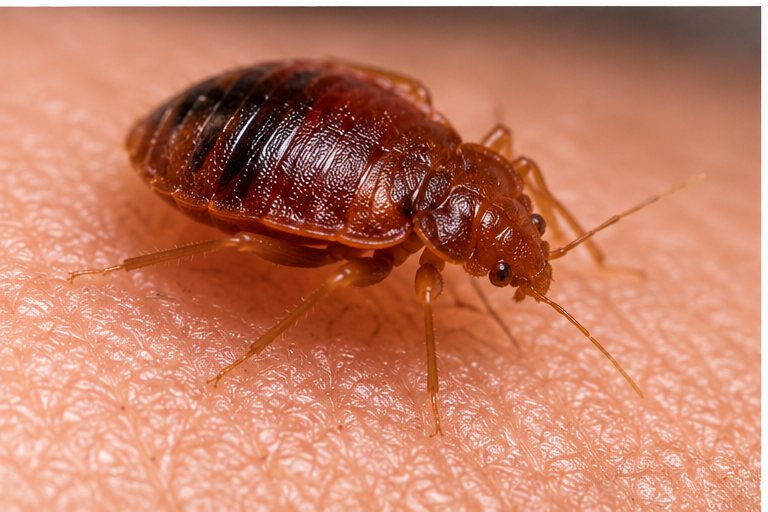
When we treat a bedroom, the gaps around the radiator and the pipework get the same attention as the skirting boards. That surprises people, who expect bedbugs to stay in the bed. Most do. The ones that do not tend to follow the cracks and channels a house already has, and heating pipes provide plenty.
Why Radiators and Pipes Matter
A radiator is usually fixed to the wall on brackets, with a narrow space behind it and a pipe dropping to the floor at each end. Where each pipe goes through the floorboards or the wall there is often a hole cut larger than the pipe, sometimes hidden under a plastic collar. Those holes lead into the void under the floor, and from there to other rooms.
Bedbugs hunt for a host by warmth and the breath people give off, but a hot radiator is not a host and they do not settle on it. What they value is a dark, narrow crack within reach of a bed. When a radiator sits right beside or behind a bed, which is common in smaller bedrooms, the brackets and the gap behind it become as good a hiding place as a headboard.
Routes Between Rooms and Flats
In a house, a pipe run can carry bedbugs from one bedroom into the next, or down into the room below. In a converted house or a block of flats the same channels can lead into a neighbour’s home, and boxed-in risers that carry pipes up through a building connect every floor.
This is one reason a problem can appear in a room where nobody has brought anything in. It is also why, in a shared building, treating one flat without thinking about its edges can leave a route open for bedbugs to return.
How to Check Them Yourself
- Turn the heating off and let the radiator cool before you touch it.
- Shine a bright white torch down behind the radiator, and along the top edge of the brackets.
- Look at the floor where each pipe goes down, and lift the plastic collar if it slides up easily.
- Check any boxing around pipes for a gap at the skirting or the ceiling.
- Look for dark spotting on the wall and bracket, pale skins, eggs and live insects.
- Note which rooms share a pipe run with the one you are worried about.
Do not try to take a radiator off the wall, and do not squirt spray into the pipe holes: it drives bedbugs further into the floor void. If you find signs, leave them where they are and tell us. Our London guide on places that get missed covers other spots worth a look.
How Treatment Reaches Them
With chemical treatment, a residual insecticide goes into the gaps around brackets, the edges of pipe holes and the skirting either side, as well as the bed and furniture. Bugs coming up through those routes cross treated surfaces. The chemical treatment page covers how the course of visits works.
Heat treatment raises the whole room, including the wall behind the radiator, to a temperature bedbugs cannot survive, and a thermal camera is used to find cold spots, which pipe runs and outside walls can create. Heat leaves nothing behind afterwards, so in a flat or shared building we may apply a light residual around the edges and pipe entries as well. See heat treatment in Merton for what the day involves.
Turning the Heating Up Will Not Do It
Some people try cranking the radiators to full and shutting the door. A domestic heating system cannot get a whole room hot enough, evenly enough, for long enough, and the bugs simply move to cooler spots. It mostly produces a large gas bill. For how bedbugs spread in general, the Merton borough page sets out a calm first week.
Related Questions
Are bedbugs attracted to radiators?
Not to the warmth itself. They are drawn to people, and use the gaps around a radiator near a bed as a hiding place.
Can bedbugs come through the pipes from next door?
They can travel along the gaps around pipes, and through the spaces pipes pass through, which can connect neighbouring flats. They do not travel inside the pipes.
Should I seal the gaps around my pipes?
Sealing gaps can help once the room has been treated, but do it after treatment, not before. Sealing first can trap bugs where treatment is harder to reach.
Will you need to take the radiator off?
Normally no. Treatment reaches behind it and around the brackets without removing it.
More Bedbug Advice for Merton
Written up in full for people in the borough, and worth reading before the treatment day.
Do UV Torches Show Bedbugs?
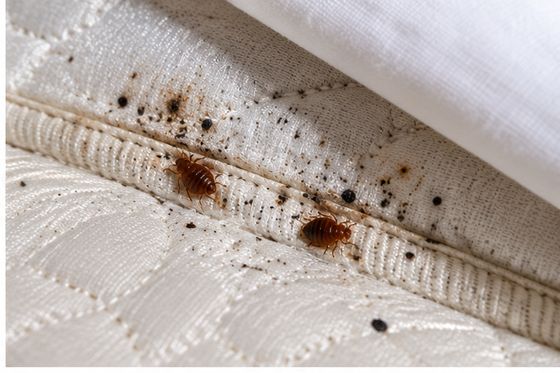
What ultraviolet light shows in a bedroom, what it misses, and the simple kit that does the job.
Read more →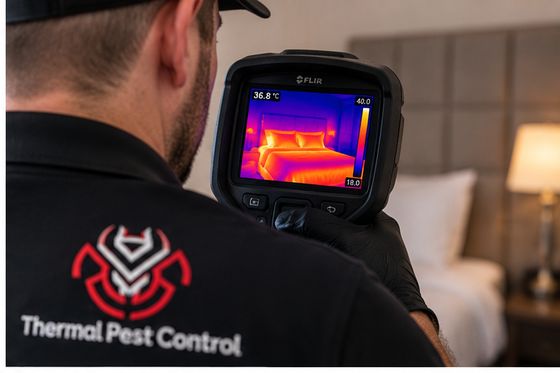
Do Bedbug Sniffer Dogs Work?
What detection dogs are good at, where they fall short, and when a close visual check is the better choice.
Read more →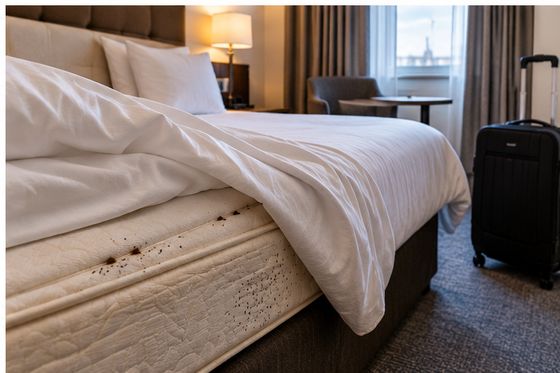
Can Bedbugs Live in the Loft?
Why an unused loft is an unlikely home, why a loft bedroom is not, and what to do with stored bags.
Read more →
From First Bite to All Clear
The usual order of events, from the first bite to a finished treatment, and what happens at each stage.
Read more →Bedbug Control Across Merton
Each area page is written around one situation we deal with.
Bedbug Treatments in Merton
Every service has its own page for Merton: heat, chemical, hotels, commercial premises and inspections.
Tell Us About the Property
Tell us what you have seen and where, and we will tell you what it needs.