
- Why Throwing It Out First Usually Backfires
- When a Mattress Can Be Treated and Kept
- When It Might Be Better to Let It Go
- Checking Your Mattress Before Deciding
- Sofas, Cots and Floor Mattresses
A mattress is where bedbugs are usually found, so it feels like the source of the trouble. It is really just the nearest hiding place to the person they feed on. They also sit in the bed frame, the headboard, the skirting and the gaps around the room. Take the mattress away and those bugs stay put, waiting for the next thing to lie down.
Why Throwing It Out First Usually Backfires
Carrying a mattress out of a bedroom means dragging it along a landing, down stairs or through a communal corridor to the lift. Bugs and eggs drop off along the way. In a block of flats, that route passes other people’s front doors. A mattress left by the bins can be picked up by someone who does not know what is in it.
Then there is the new one. Put a fresh mattress into an untreated frame and room, and the bugs that stayed behind move straight in. You have paid for a mattress and still need the treatment.
When a Mattress Can Be Treated and Kept
Most mattresses in ordinary use can be kept. Both treatments deal with them:
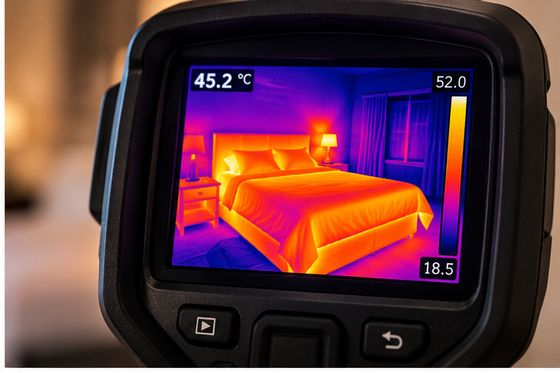
- With heat, the mattress stays in the room while the whole space is raised to a temperature bedbugs cannot survive. The heat gets into the padding and the seams, and it kills eggs as well as adult bugs.
- With chemical treatment, the seams, piping, handles and the base are treated with a residual insecticide. The bed is stripped and the bedding hot-washed first. We tell you on the day when the bed can be used again.
After treatment, a zipped encasement designed for bedbugs can be put over the mattress. It stops anything left inside getting out and gives new arrivals nowhere to hide in the seams. The London guide on where pest controllers treat shows what gets covered around the bed.
When It Might Be Better to Let It Go
There are cases where keeping it is not worth it. We will say so if we see one, and then it is removed after treatment, wrapped, not before.
- The fabric is torn or split, so bugs can get inside the padding where a spray cannot reach and an encasement will not sit properly.
- It is heavily stained and soiled from a long-running problem, and nobody in the house wants to sleep on it again.
- It was already worn out and due for replacement anyway.
- It is a thin foam mattress that is already falling apart at the edges.
A mattress bought second-hand, from a van or at the door is a separate question. The Forest Gate page covers what to do if that is how the problem started.
Checking Your Mattress Before Deciding
- Strip the bed and take the bedding straight to a hot wash in a bag.
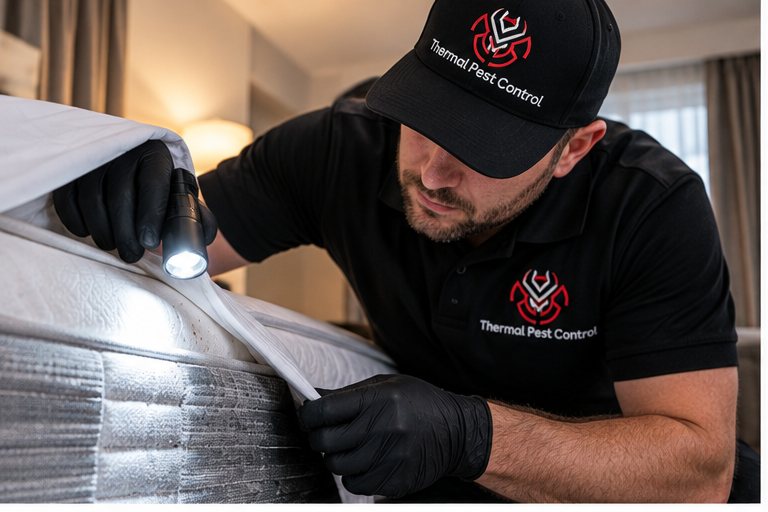
- In good light, run along every seam and the piping, and look at the handles and labels.
- Look for dark spots like ink marks, pale shed skins, tiny white eggs and live bugs.
- Lift the mattress and check the base or slats underneath, and the corners of the frame.
- Take photos and ring 0800 955 1018 with what you found.
Finding spotting on a mattress does not mean it has to go. It means it has to be treated along with everything around it.
Sofas, Cots and Floor Mattresses
The same thinking applies to a sofa bed, a futon or a spare mattress that goes down on the floor when people stay. In a home where many people sleep, these often get forgotten, and they are exactly where bugs survive a treatment of the main beds. Tell us about every one when you call. A cot mattress is small and inexpensive enough that replacing it after treatment often makes sense; ask us first. For what to expect in the weeks after, see what happens after bedbug treatment.
Related Questions
Can I put my mattress outside to kill the bedbugs?
No. Leaving it outside does not reliably kill them and moving it spreads them. Leave it in the room for treatment.
Is a mattress encasement enough on its own?
No. It traps what is inside the mattress, but the bugs in the frame, the headboard and the room are untouched. It is something to add after treatment, not instead of it.
Can we sleep on the mattress between chemical visits?
Usually yes, once the treated surfaces are dry and we have said the room can be used. Sleeping in the bed as normal also helps, because the bugs come out and cross the treated surfaces.
How much does it cost to treat a bedroom with the mattress?
Treatments start at £220. The mattress is part of the room, and the figure depends on the number of rooms and whether it is heat or chemical.
More Bedbug Advice for Newham
Written up in full for people in the borough, and worth reading before the treatment day.
Electric Blankets and Bedbugs
Warm is not the same as lethal: why a heated bed does not work, and why trying it is risky.
Read more →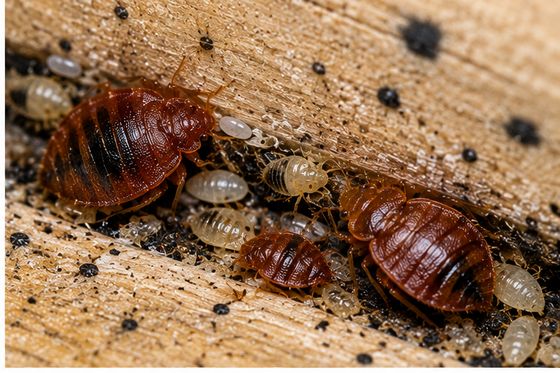
Do Clothes Have to Go?
Almost never: washing, drying, bagging and heat for clothes, and the awkward items.
Read more →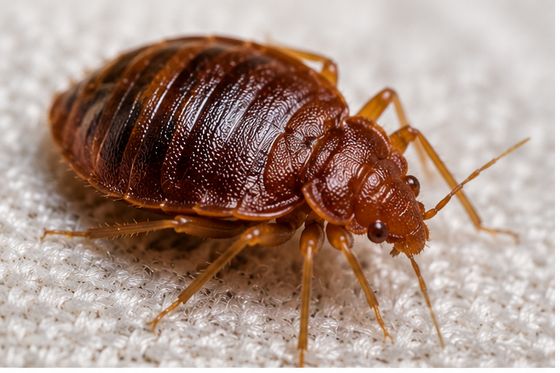
Bedbugs and Other Pests
Mice, cockroaches or fleas as well as bedbugs: why each needs its own treatment, and the order.
Read more →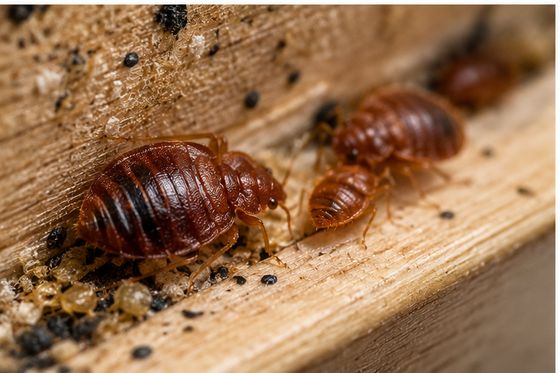
Door Frames and Architraves
The gap behind the door frame is a hiding place and a route between rooms; how to check it.
Read more →Bedbug Control Across Newham
Each area page is written around one situation we deal with.
Bedbug Treatments in Newham
Every service has its own page for Newham: heat, chemical, hotels, commercial premises and inspections.
Tell Us About the Property
Tell us what you have seen and where, and we will tell you what it needs.